Vinyl 101, hands-on.
Start with our three interactive calibration labs, then dive into every Vinyl 101 and Fix & Setup guide from our archive below.
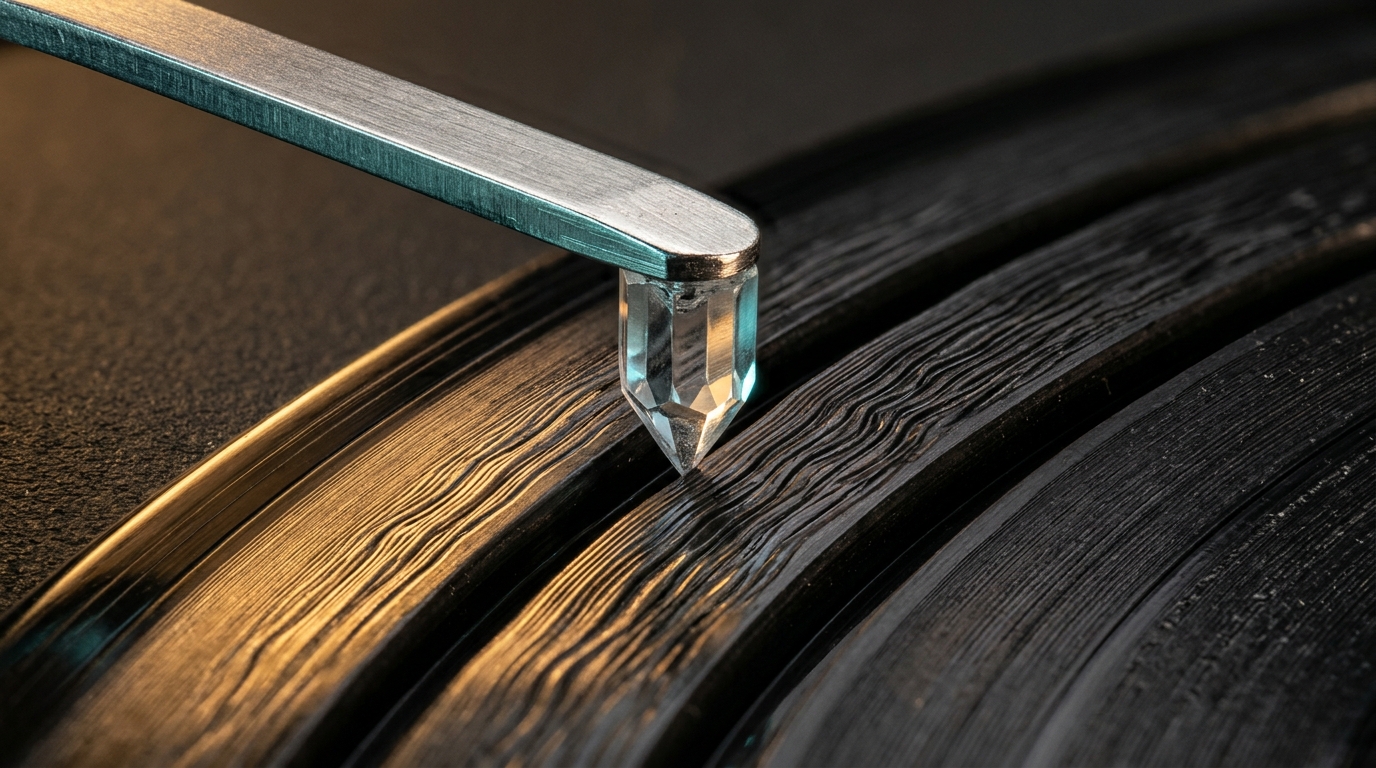
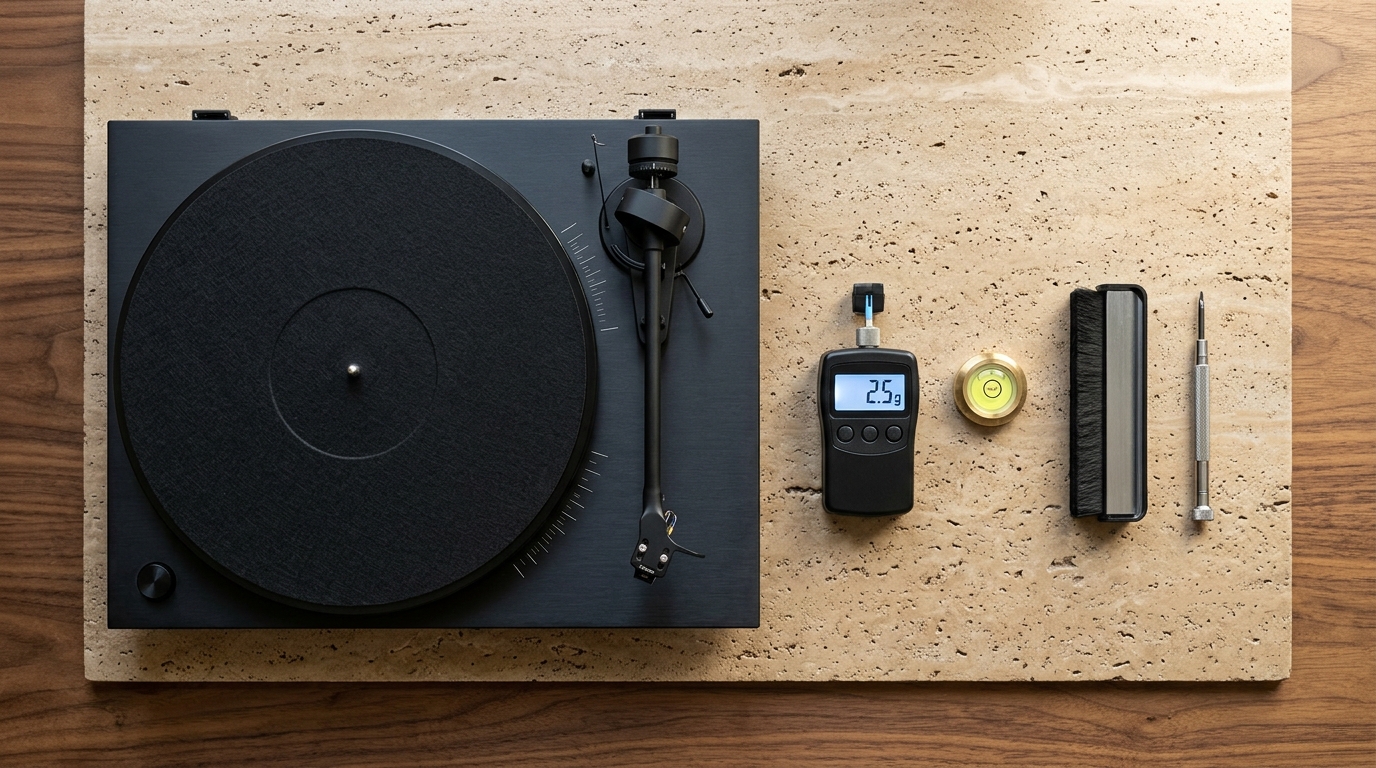
Vinyl 101 interactive lab
Test tracking force physics on a live tonearm gauge, compare cartridge internals, and diagnose playback faults.
Tracking force simulator
Drag the counterweight slider. The tonearm pitch, groove waveform, and wear readout respond together.
Factory sweet spot (3.0g–4.0g) for AT-3600L / AR-N60 diamond styli: rock-solid tracking and vinyl-safe.
Inside the machine
Uses a lightweight magnet and coil to track grooves cleanly around 3.5g, preserving vinyl longevity and stereo detail.
Stiff crystal cantilever needs 4.5–5.5g downforce, adding surface noise and faster groove wear.
60-second troubleshooter
Tracking force too light (< 2.0g), unlevel plinth, or worn ceramic tip.
- Place a bubble level on the platter and level the cabinet feet.
- Set counterweight near the 3.5g standard (2.5g–4.0g safe window).
- Brush dust from the diamond tip with a carbon-fiber stylus brush.
Complete Vinyl 101 & Fix & Setup Library
All Vinyl 101 foundational lessons and Fix & Setup troubleshooting guides preserved from our archive.
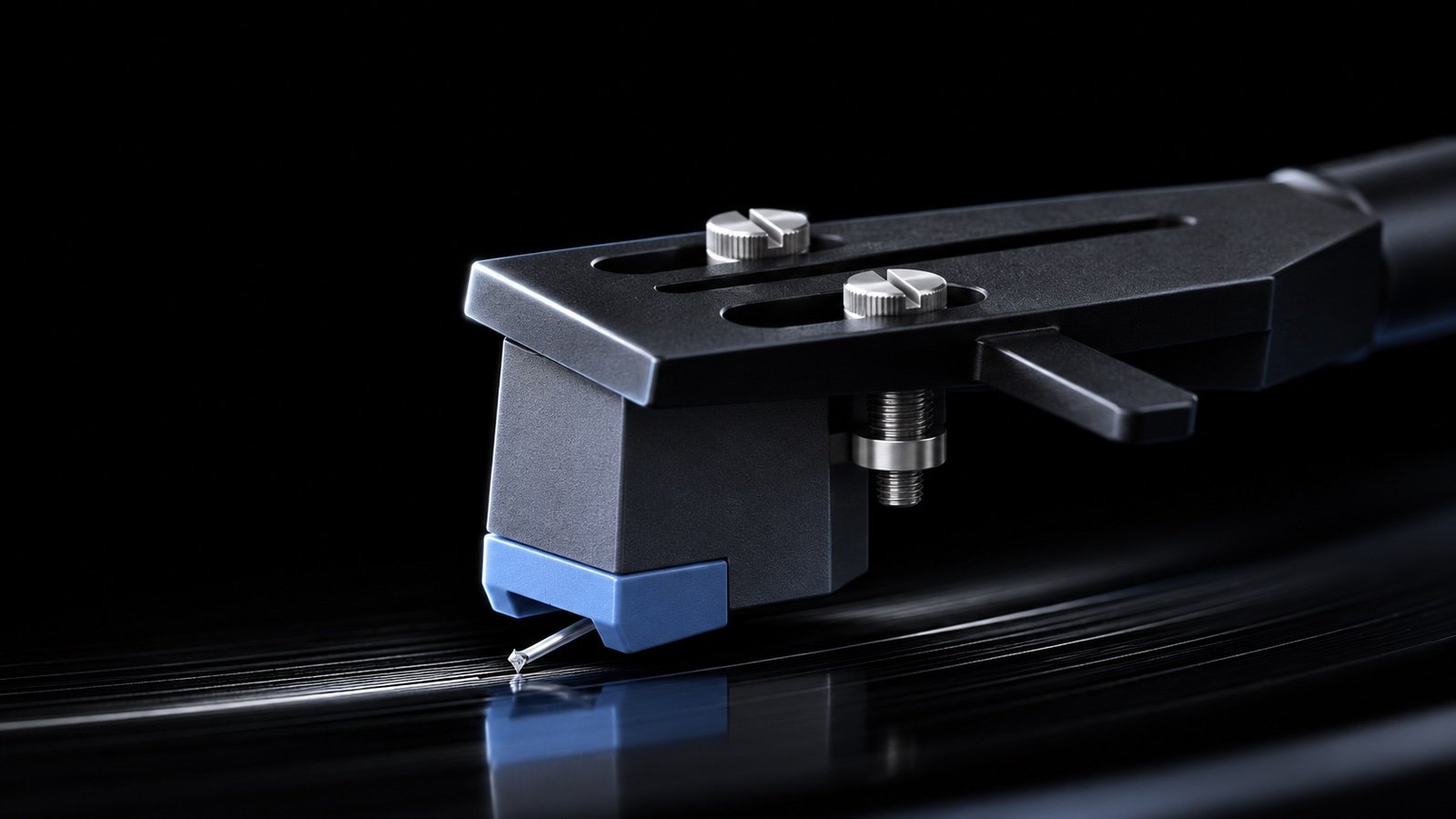
Turntable Cartridges and Styli — The Complete Guide
The cartridge is the only part that touches your record. Cartridge types, stylus shapes, tracking force, alignment and replacement — the complete map, with links to every detail.

The Economics of Vinyl — Why Records Cost What They Cost in 2026
Why vinyl records cost what they cost in 2026 — manufacturing economics, limited edition pricing, original pressing values, and streaming vs. vinyl artist revenue.

Independent Labels vs. Major Labels — What It Means for Your Record
Independent vs. major labels — how label type affects vinyl pressing quality, collectibility, and what to look for when buying.
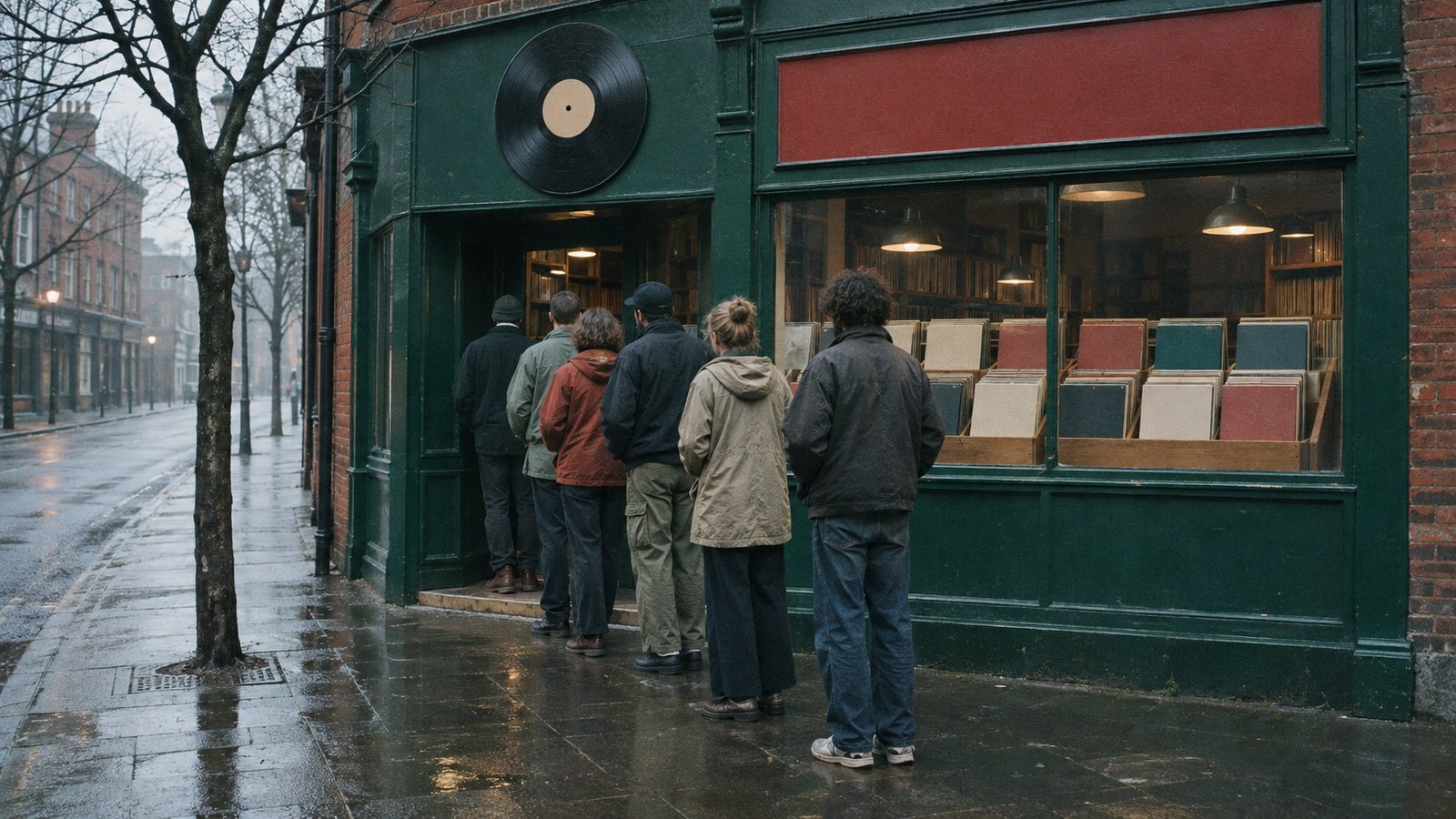
Record Store Day — What It Is, How It Works, and How to Shop It
Everything you need to know about Record Store Day — when it happens, how shops allocate copies, and how to get what you want.
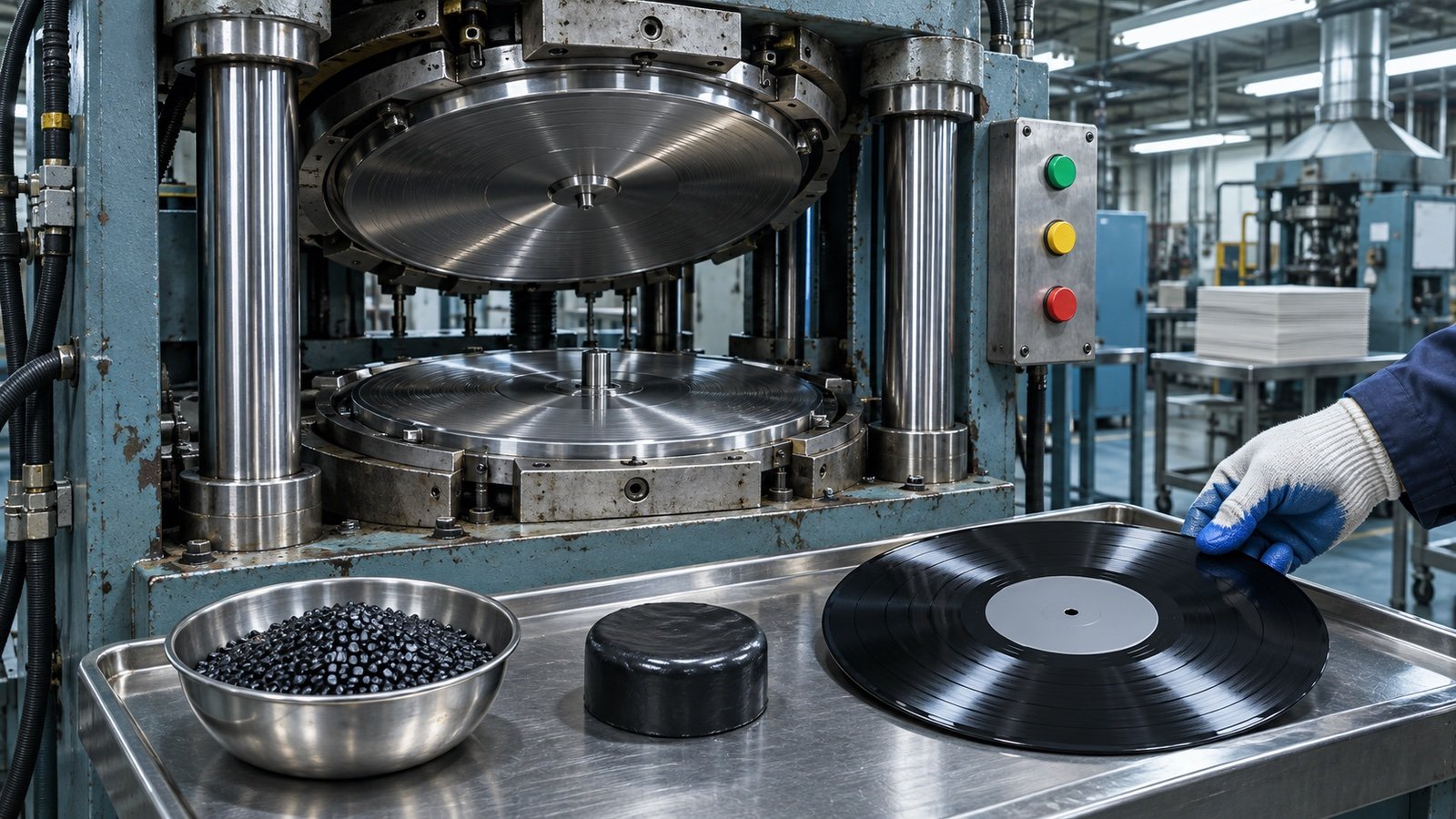
How a Vinyl Record Is Made — From Lacquer to Pressing Plant
How vinyl records are manufactured — from lacquer cutting to pressing plants. The complete production process explained.

Record Storage Systems — Shelving, Climate and Long-Term Care
How to store vinyl records correctly — vertical storage, shelving options, climate control, and inner sleeve upgrades.

Building a Genre Collection — Jazz, Classical, Rock and Electronic
How to build a vinyl collection by genre — jazz, classical, rock, and electronic. Key labels, starting points, and collecting strategies.
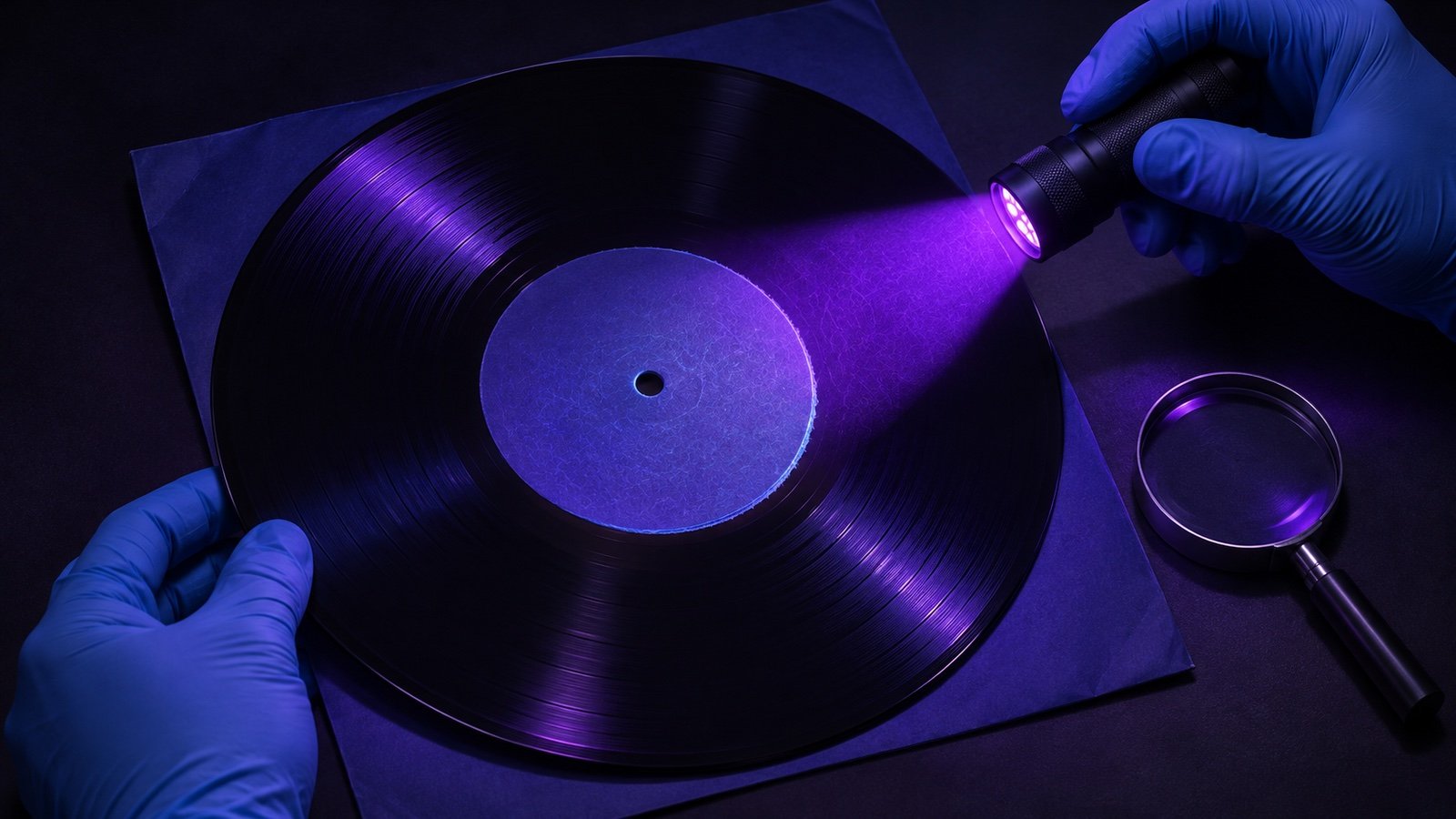
How to Spot a Fake or Counterfeit Vinyl Pressing
How to identify fake and counterfeit vinyl pressings — label checks, dead wax verification, and what to listen for.
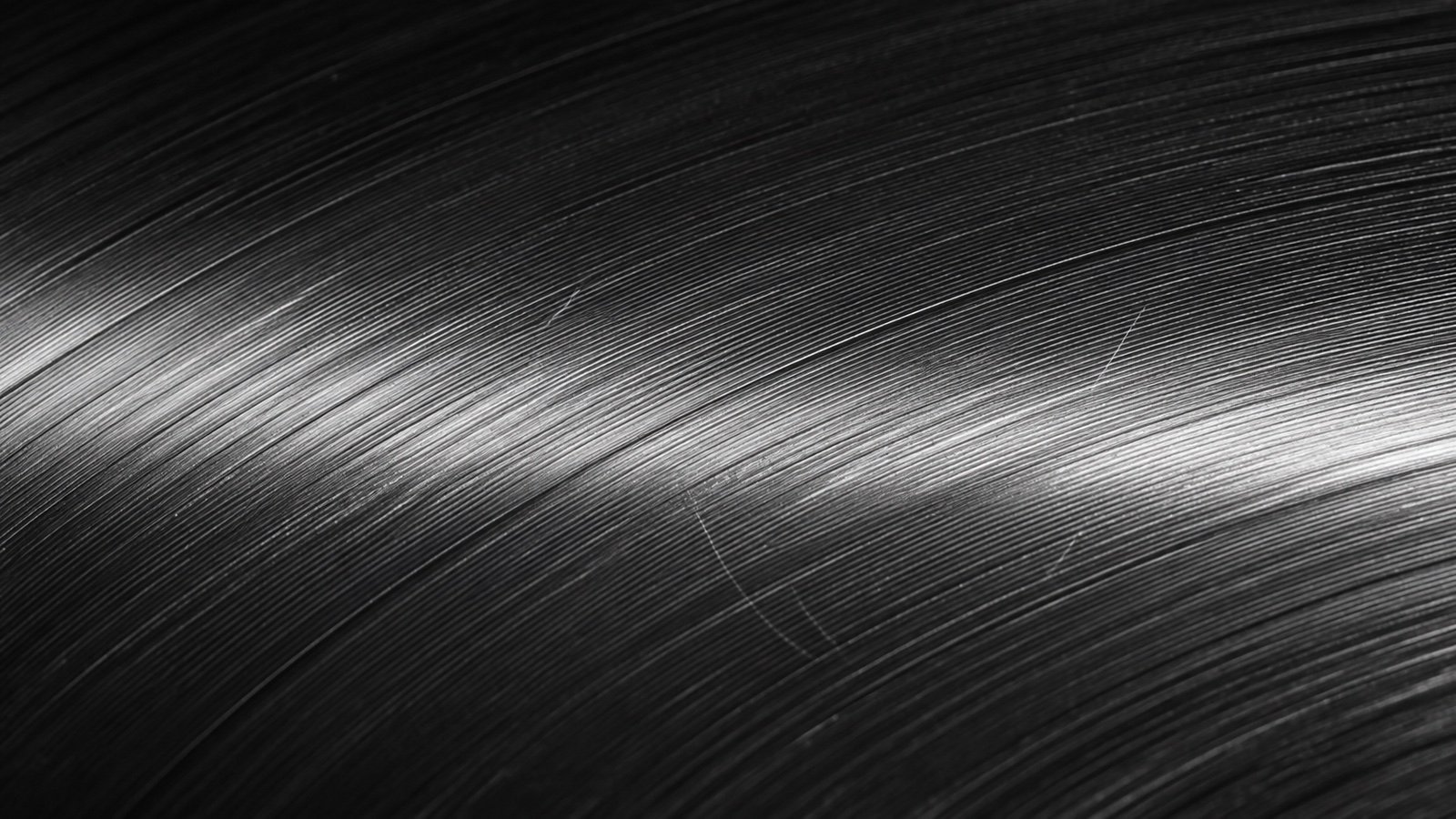
Record Grading — Understanding VG, VG+, NM and Mint
Understand vinyl record grading: VG, VG+, NM, Mint and what each grade means for playback and value.

How to Use Discogs — Buying, Selling and Grading Records
Learn how to use Discogs to buy, sell and grade vinyl records. The essential marketplace guide for every record player owner.

Arkrocket Huygens Record Player Setup Guide
This guide covers the complete setup of the Arkrocket Huygens from unboxing to first play. The Huygens is an all-in-one system — four built-in speakers, 30W output, full Bluetooth in/out, and triple shock-absorption. Setup takes approximately 15 minutes. What’s in the Box Item Qty Arkrocket Huygens turntable unit 1 45 RPM adapter (centre insert) 1 […]
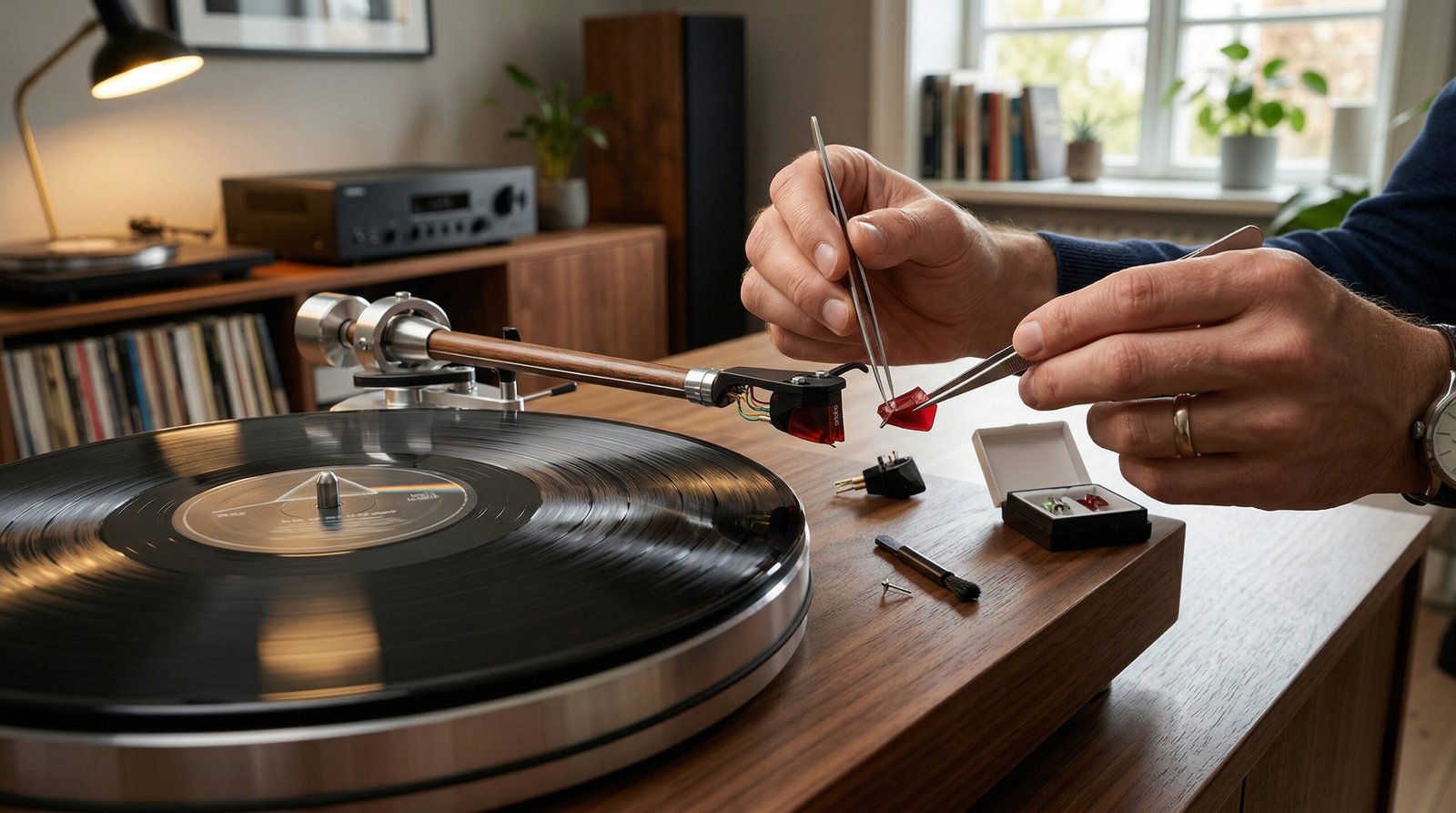
How to Replace a Turntable Stylus
This is one part of a larger topic. For the full picture — cartridge types, stylus shapes, tracking force, alignment and replacement — see Turntable Cartridges and Styli: The Complete Guide. A stylus (needle) is a consumable part. It wears down over hundreds of hours of use, and a worn stylus damages records while producing […]
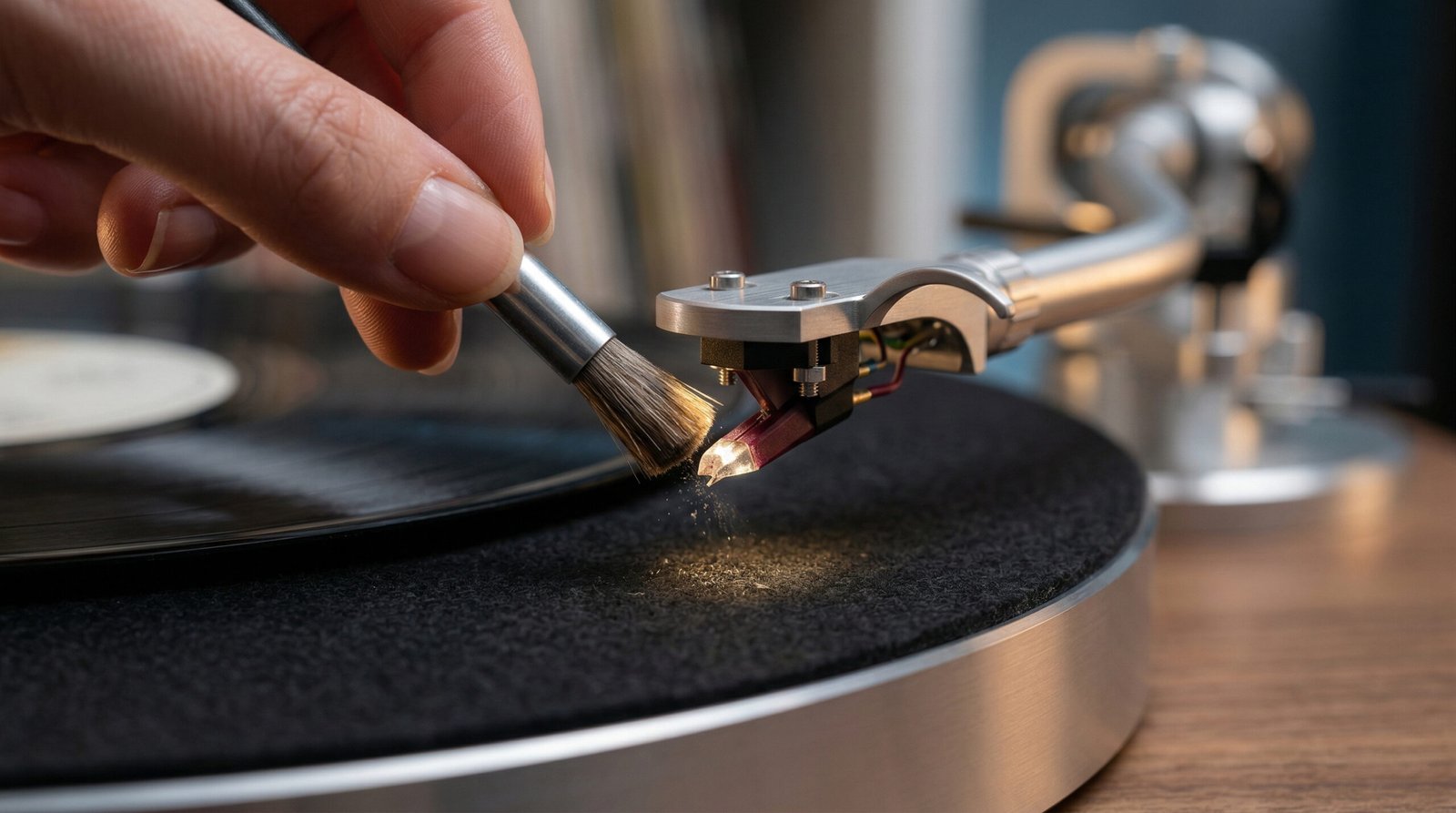
How to Clean a Record Player Stylus
This is one part of a larger topic. For the full picture — cartridge types, stylus shapes, tracking force, alignment and replacement — see Turntable Cartridges and Styli: The Complete Guide. The stylus tip traces a microscopic groove at several thousand vibrations per second. Even a tiny piece of lint on the tip is enough […]
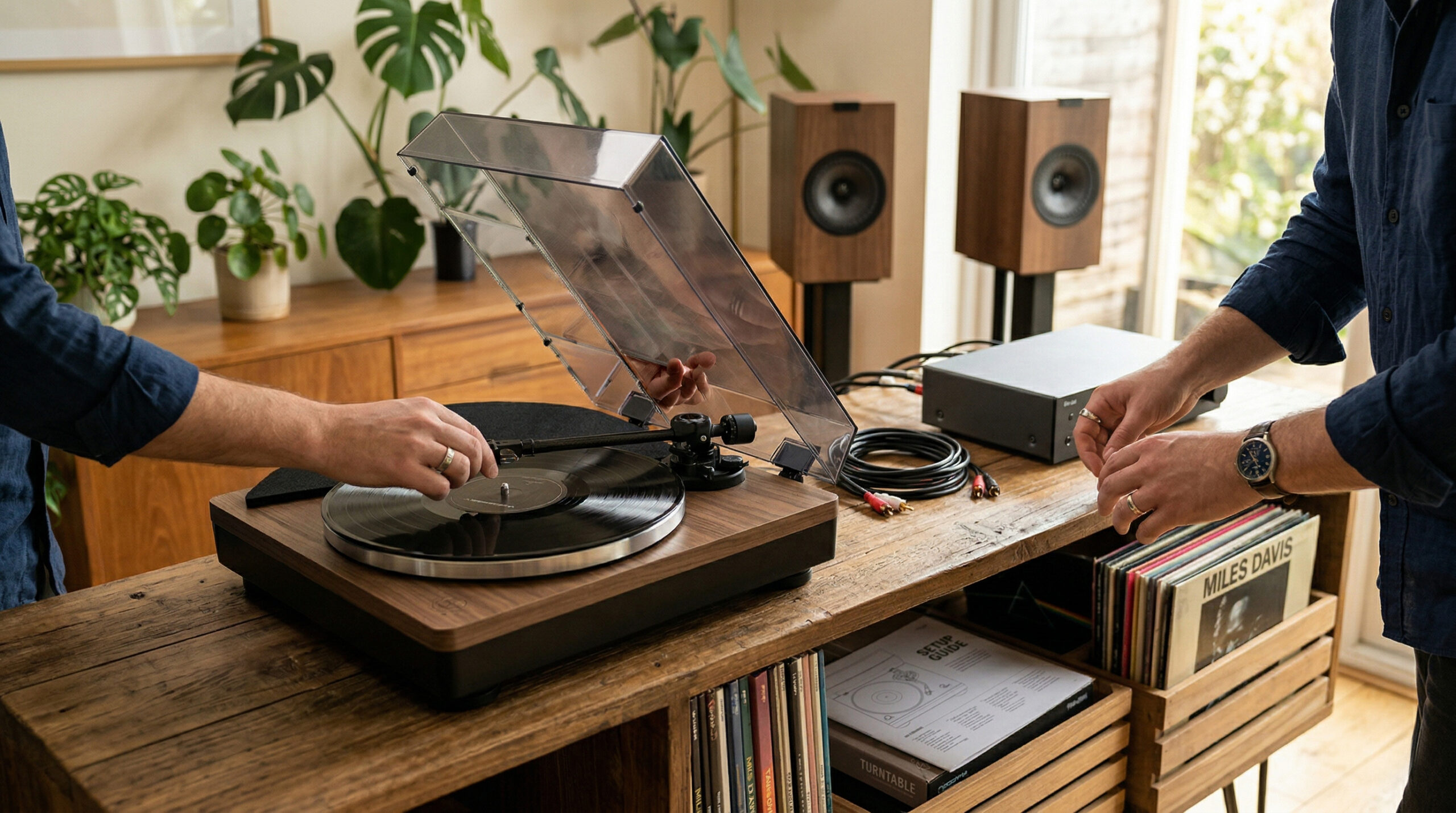
How to Set Up a Record Player for the First Time
Setting up a record player for the first time takes about 20 minutes if you know what to do — or two frustrated hours if you don’t. This guide covers every step in order, from unboxing to the first play, with the most common mistakes flagged at each stage. Before You Start: What’s in the […]
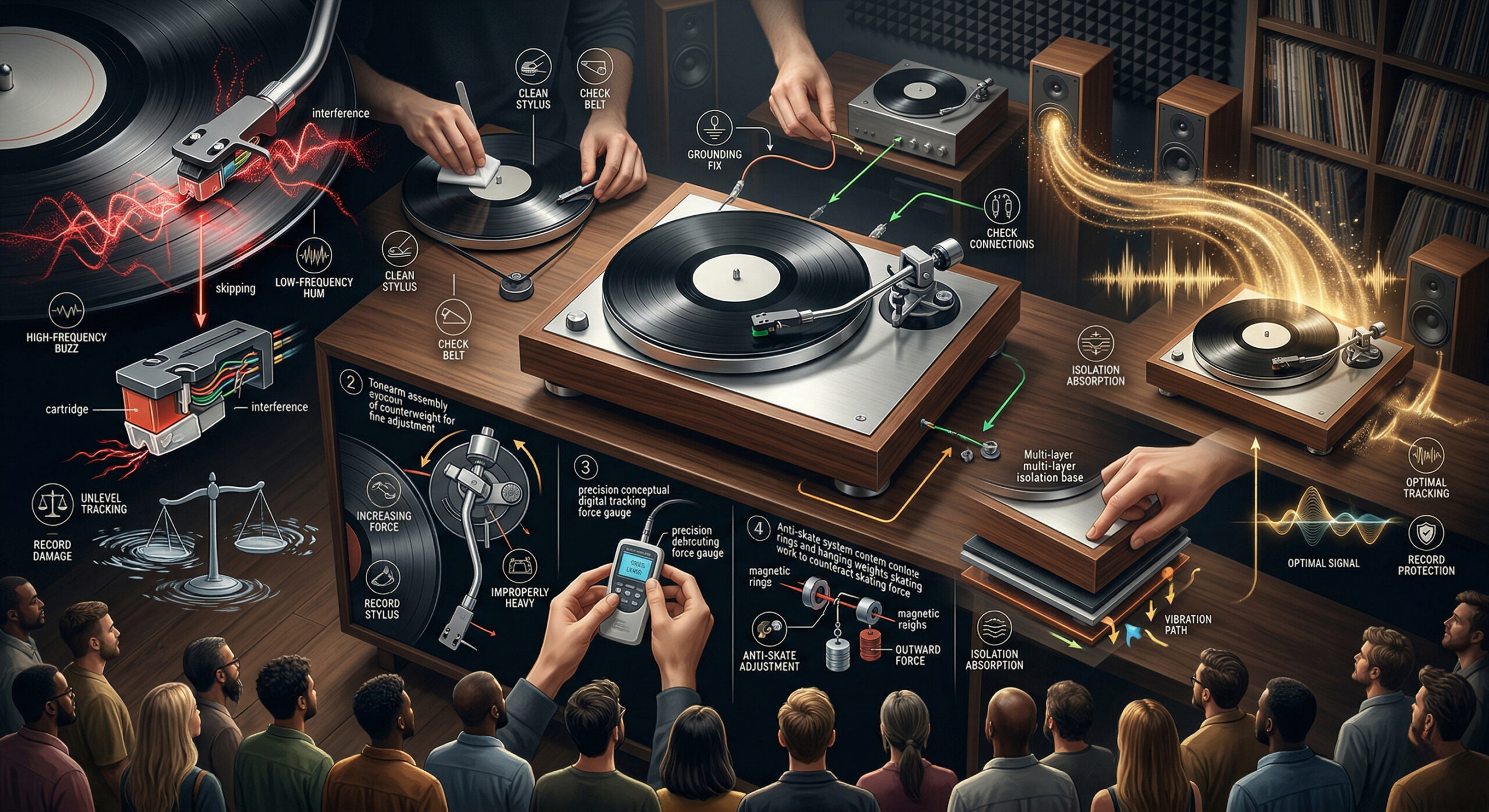
How to Connect a Record Player to Speakers
Connecting a record player to speakers confuses more new buyers than almost any other setup step — mainly because there are several different ways to do it, depending on what speakers you have and whether your turntable has a built-in phono preamp. This guide covers every connection type, step by step. First: Does Your Turntable […]
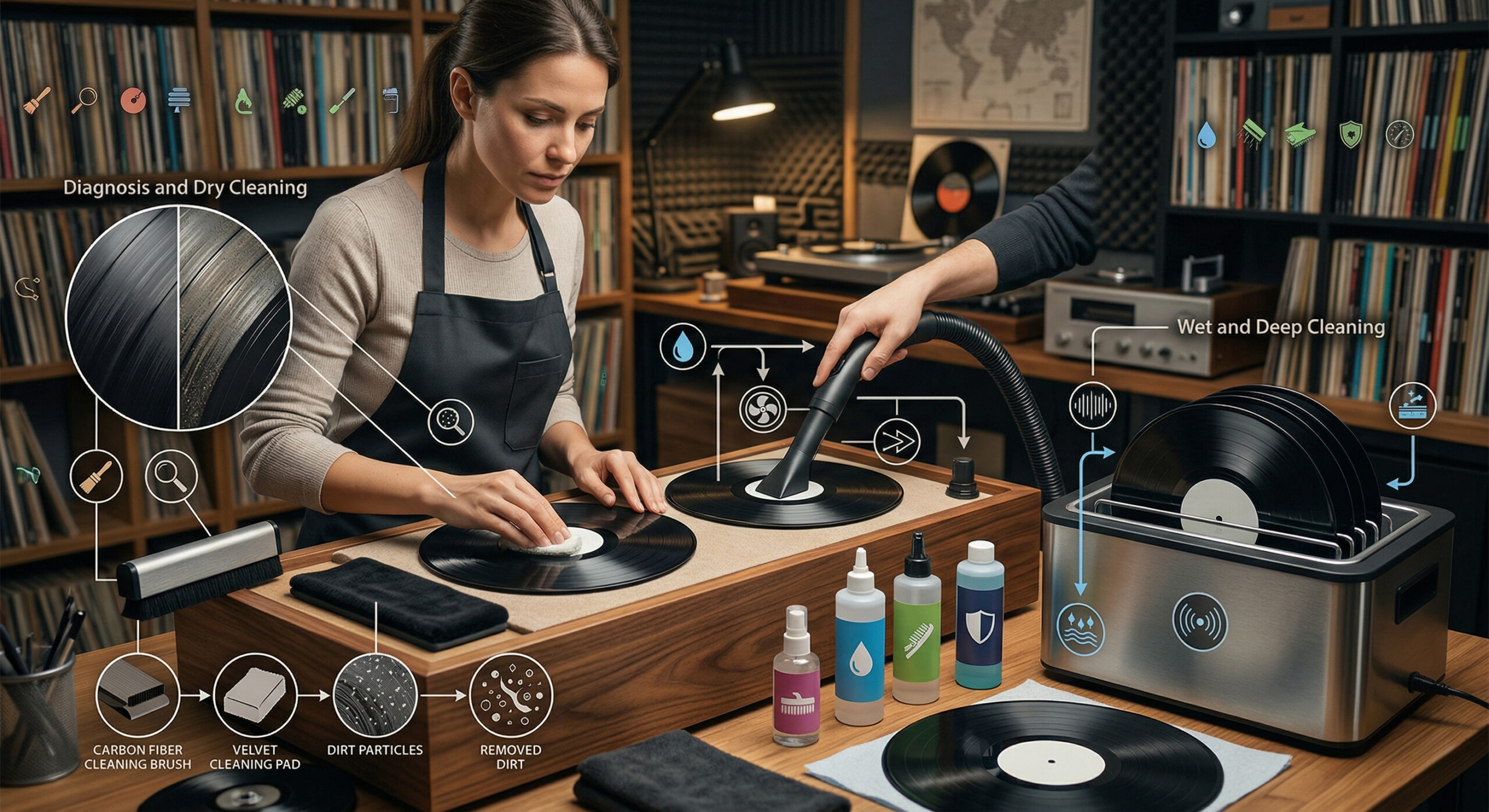
How to Clean Vinyl Records
Most pops, crackles, and skipping on vinyl is not a record player problem — it’s a dirty record problem. Dust, static, fingerprint oils, and manufacturing residue in the grooves all affect playback. The good news: most of it is removable, and a clean record sounds dramatically better than a dirty one. This guide covers three […]
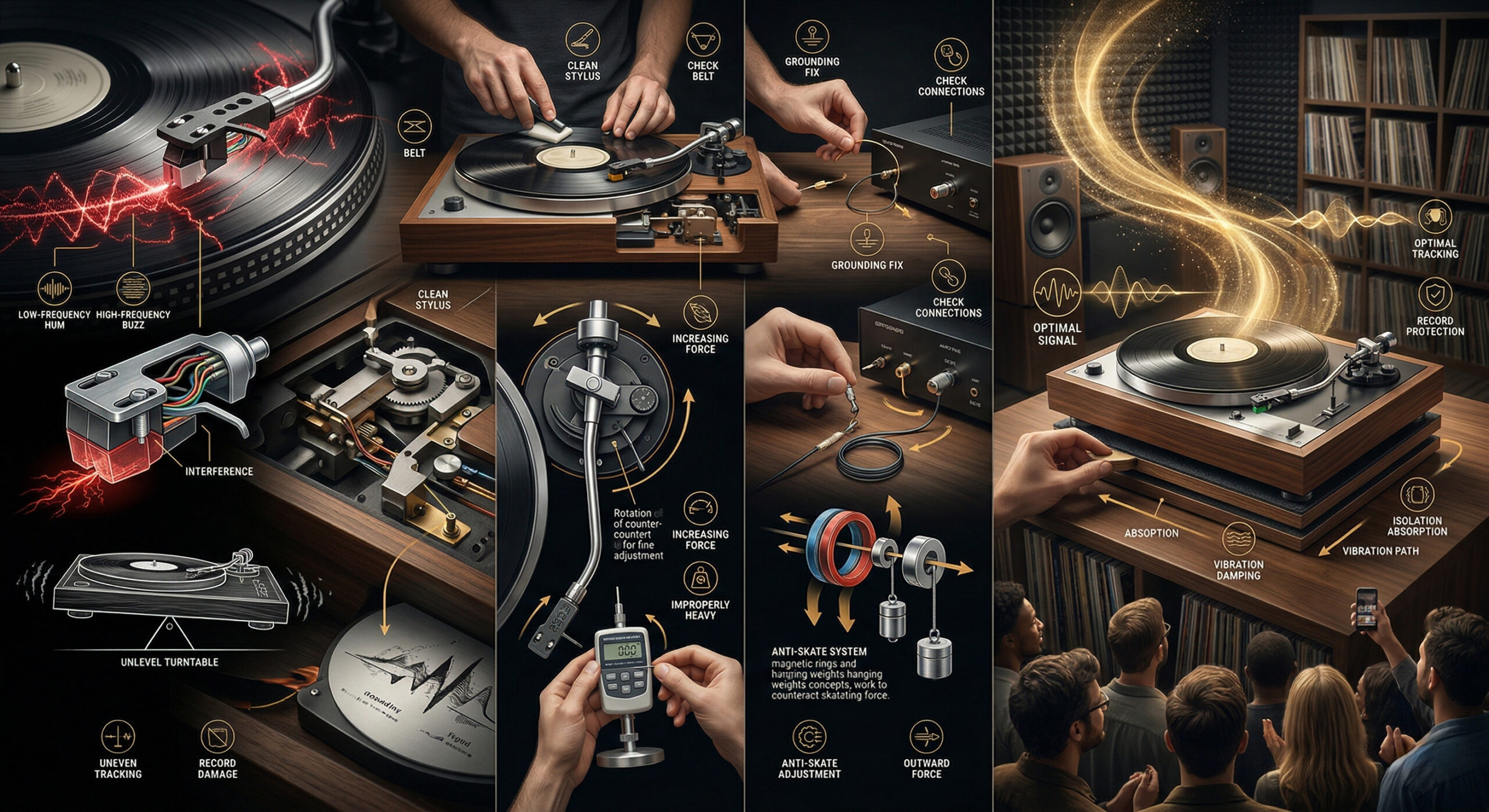
How to Level a Turntable
An unlevel turntable is one of the most overlooked causes of skipping, inner-groove distortion, and premature stylus wear. Even a small tilt — invisible to the naked eye — creates enough of an imbalance for the tonearm to drift inward or outward across the record rather than tracking straight. This guide shows how to check […]
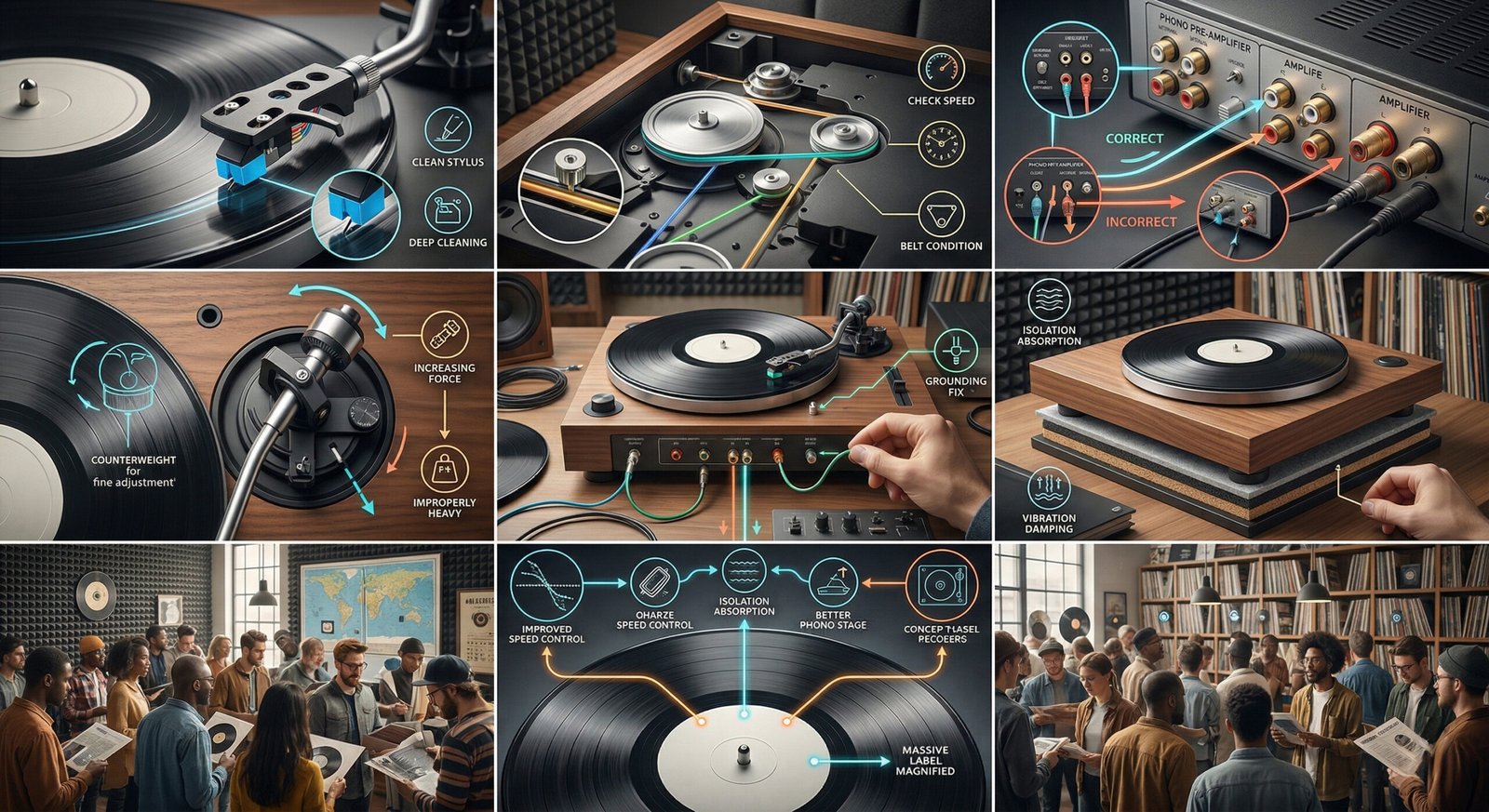
Record Player No Sound? 7 Causes and Fixes
Your record is spinning, the stylus is on the groove, but nothing is coming out of the speakers. This is one of the most common issues new record player owners encounter — and in almost every case, it’s a setup issue rather than a hardware fault. Work through the list below from top to bottom. […]
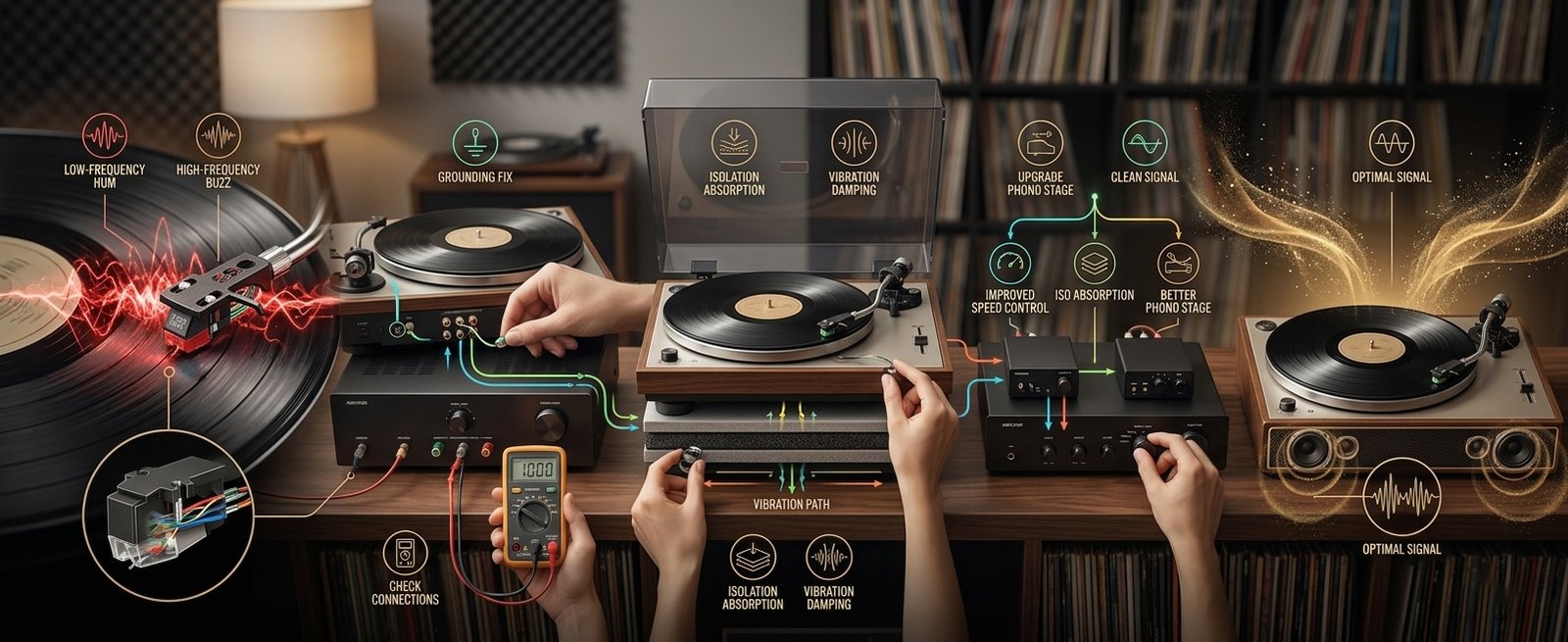
Turntable Hum and Buzzing: How to Fix
A constant hum or buzz from a record player is one of the most common setup problems — and one of the most solvable. In almost every case, the cause is one of three things: a grounding issue, a double-preamp error, or electrical interference from nearby electronics. This guide helps you identify which one and […]
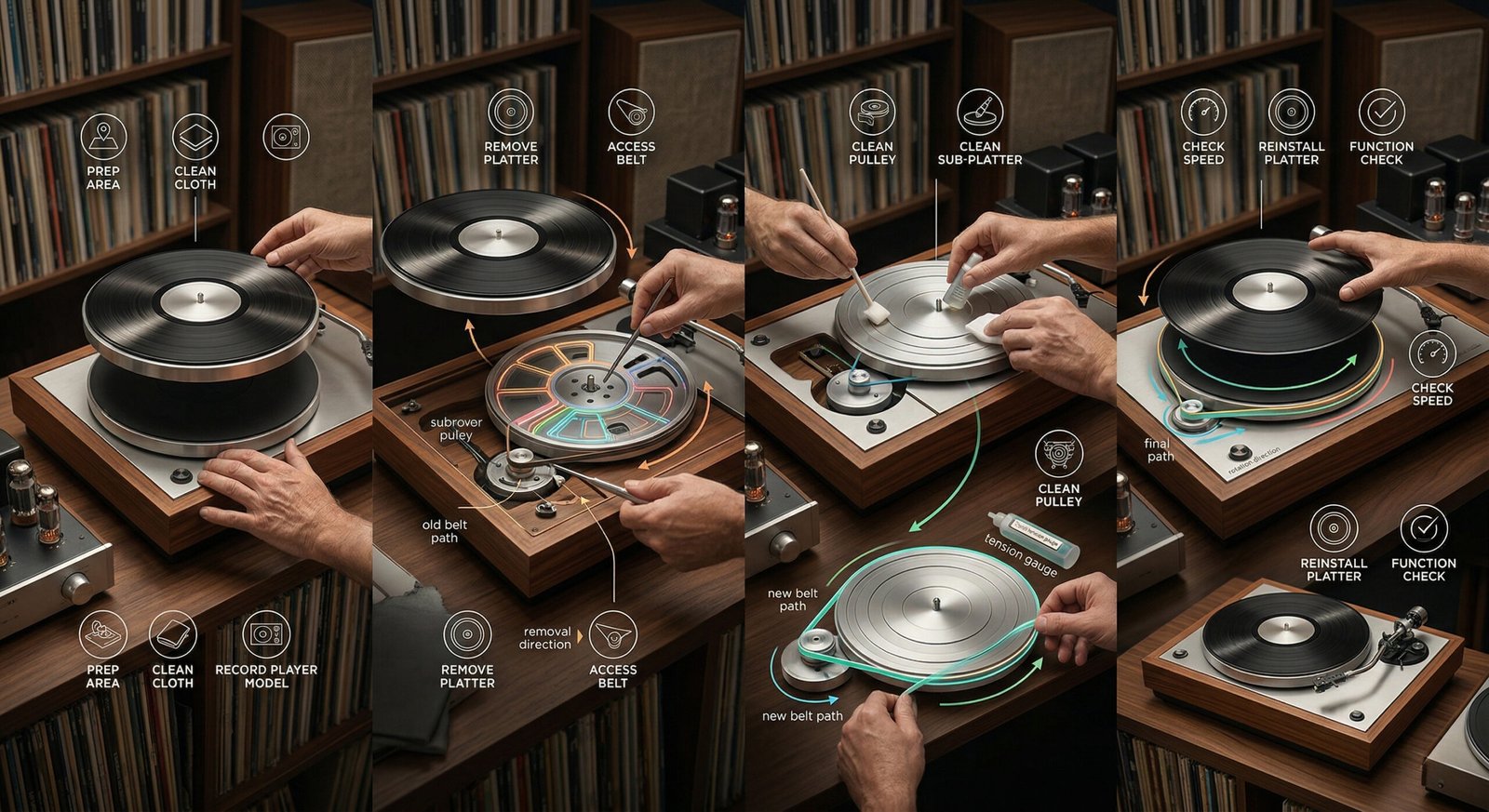
How to Replace a Turntable Belt — Step-by-Step
A turntable belt is a rubber loop that connects the motor to the platter. Over time it stretches, slips, or breaks — causing the platter to spin too slowly, inconsistently, or not at all. Replacing it is one of the simplest turntable repairs, typically taking under 10 minutes with no tools. Signs Your Belt Needs […]
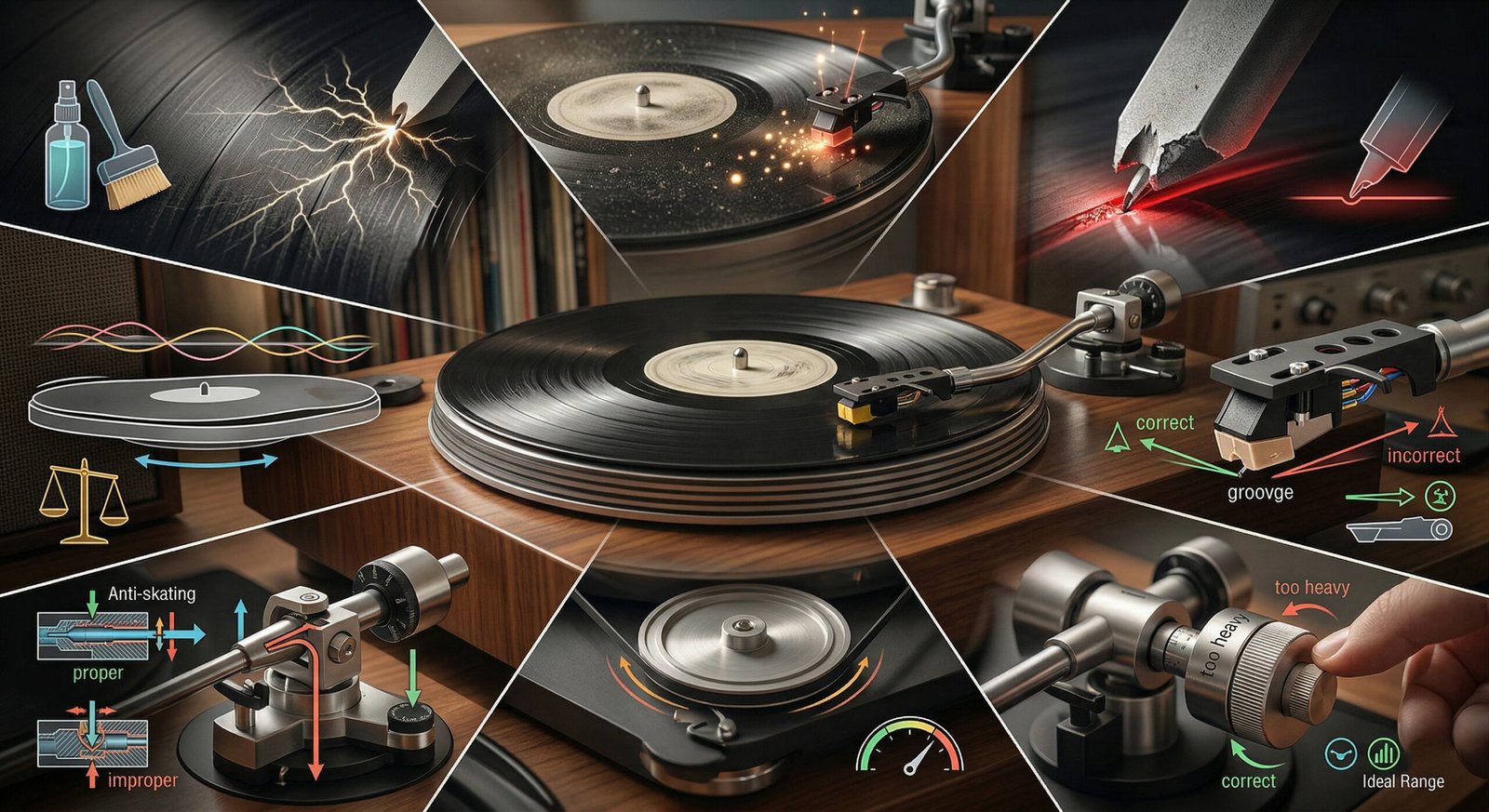
Why Is My Record Skipping? 8 Causes and How to Fix Each One
A record that skips is one of the most common problems with turntables — and one of the most fixable. The cause is almost never the record player itself. In most cases, skipping comes down to one of eight issues, most of which can be resolved in under ten minutes without any tools. Work through […]
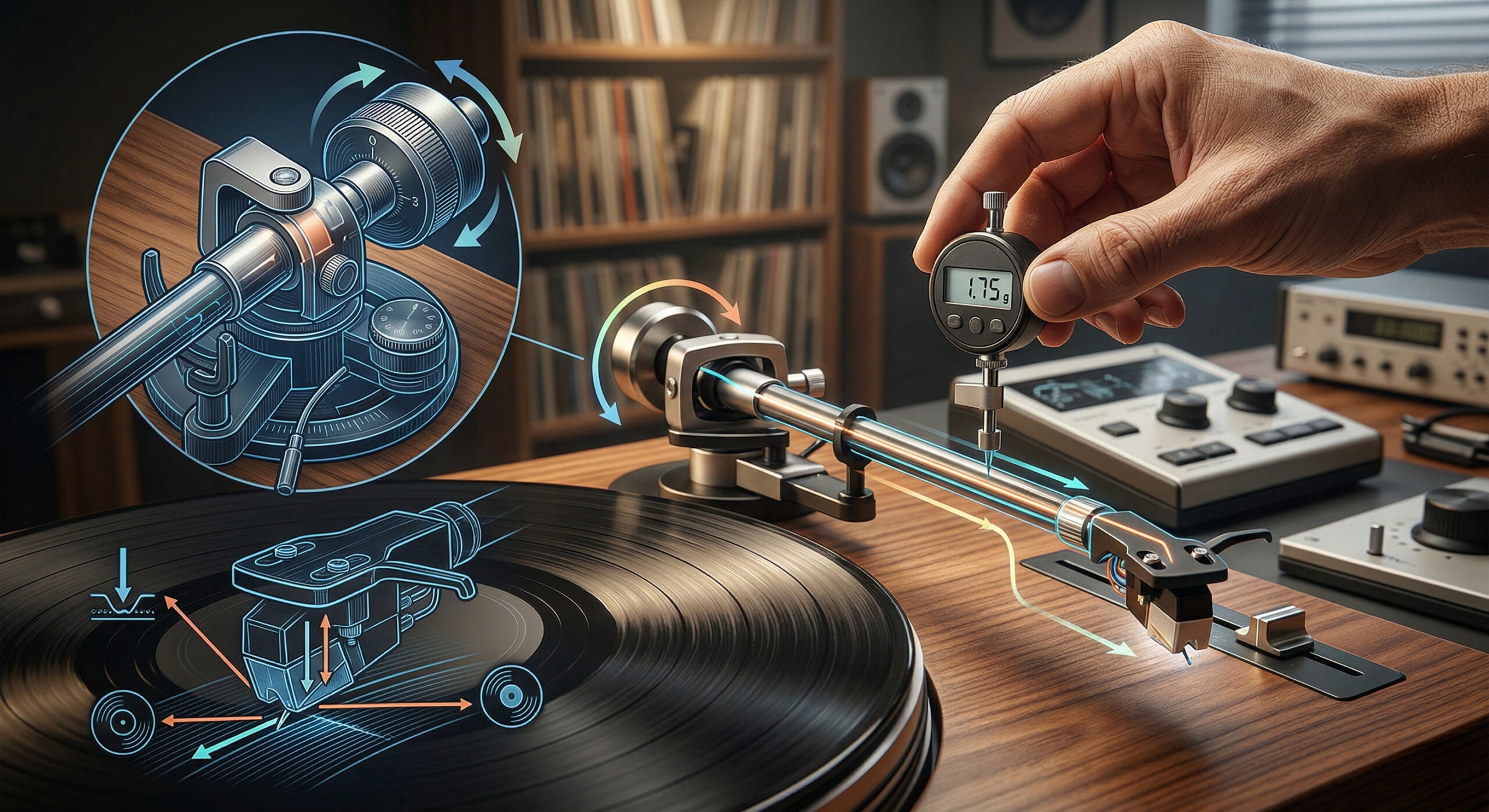
How to Set Tracking Force on a Record Player
This is one part of a larger topic. For the full picture — cartridge types, stylus shapes, tracking force, alignment and replacement — see Turntable Cartridges and Styli: The Complete Guide. Tracking force is the downward pressure your stylus exerts on a record groove. Too light and the stylus skips, distorts, or loses stereo separation. […]
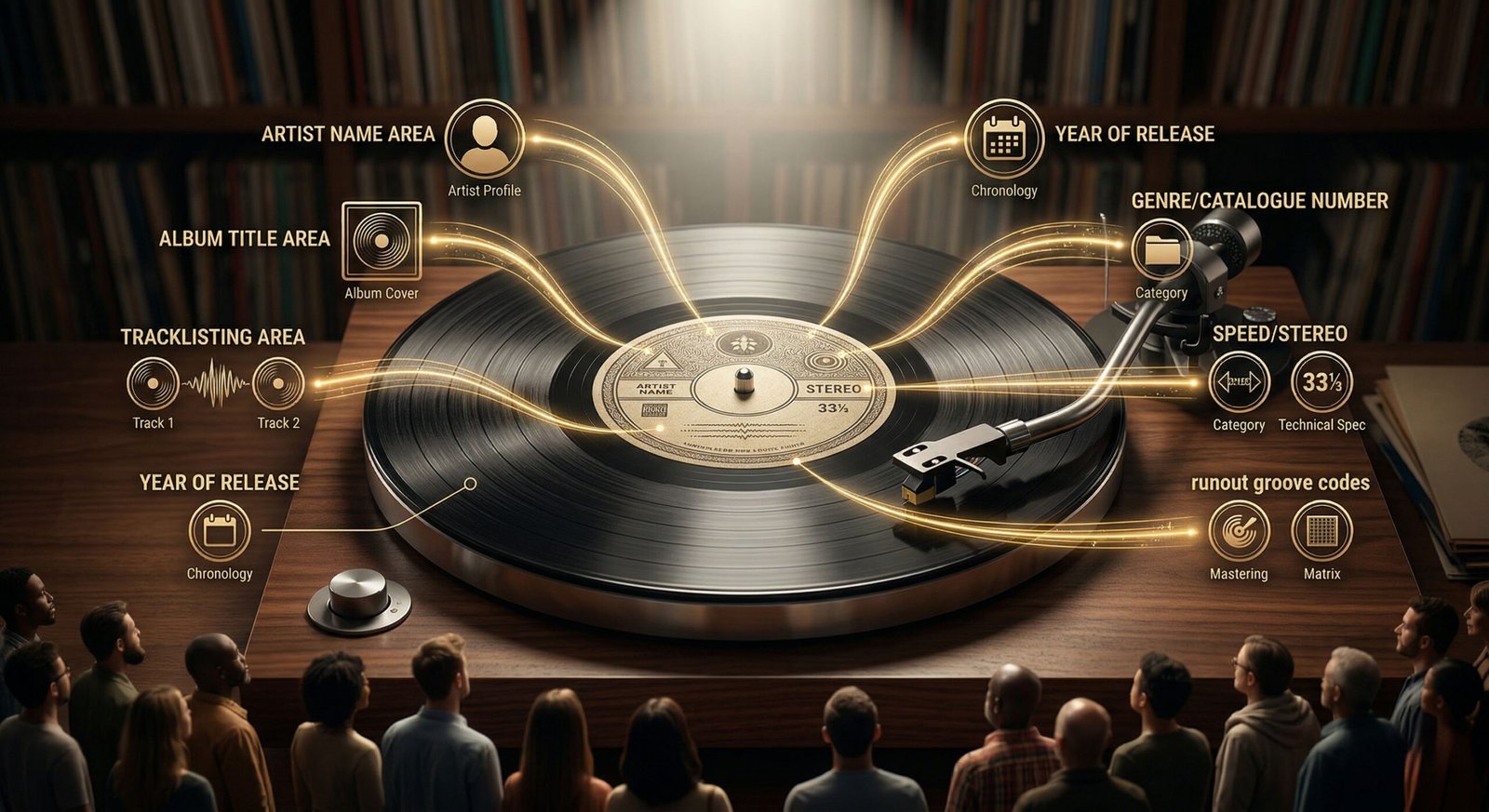
How to Read a Vinyl Record Label — Catalog Numbers, Matrix Codes and Dead Wax Explained
Vinyl 101 · Unit 7 · Lesson 7.3 More information than you might expect Every vinyl record carries two layers of identification: the label on the surface (catalog number, artist, track listing, release year, country) and the dead wax etched into the vinyl itself (matrix number, cut number, pressing plant code, mastering engineer initials). Together […]

Original Pressings vs Reissues — Which Should You Buy?
Vinyl 101 · Unit 7 · Lesson 7.2 The honest answer — it depends on three things Whether an original pressing sounds better than a reissue depends on: which original (not all eras produced equal vinyl), which reissue (a well-sourced audiophile reissue can surpass a worn original), and what you’re buying for (listening vs. collecting). […]

Where to Buy Vinyl Records — New, Used, Local and Online
Vinyl 101 · Unit 7 · Lesson 7.1 Four places — one principle Local record stores for discovery, community, and records you can inspect before buying. New online retailers (Amazon, direct label sites) for current releases with reliable condition. Discogs for used records from around the world — by far the largest selection, but requires […]
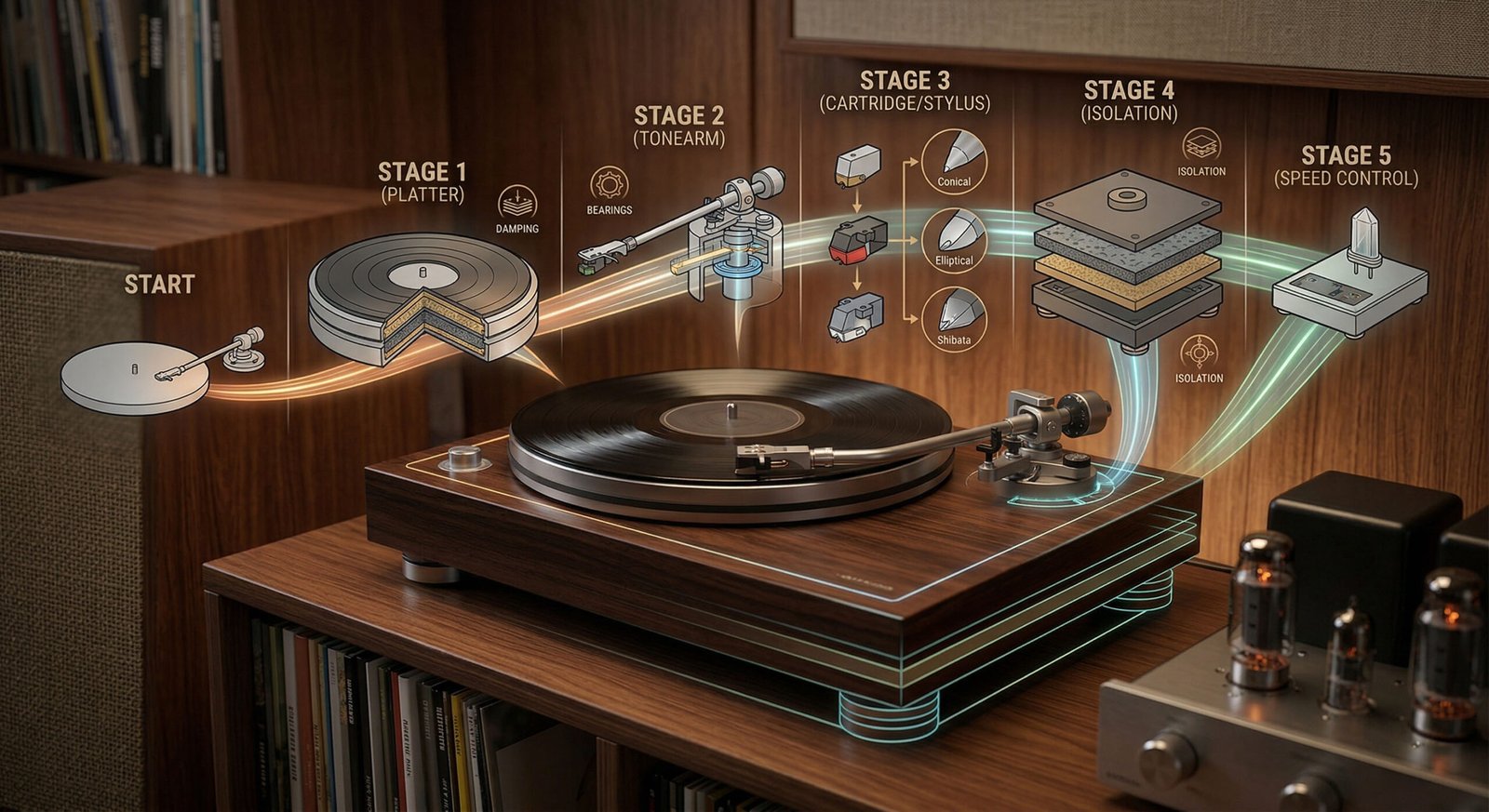
The Vinyl Upgrade Path — What to Improve First for the Biggest Sound Improvement
Vinyl 101 · Unit 6 · Lesson 6.4 The order that matters Most upgrade money is wasted because people upgrade in the wrong order. The rule is simple: fix the source before you improve the reproduction. A better stylus on a dirty record reveals more dirt. A better phono preamp on a worn stylus reveals […]
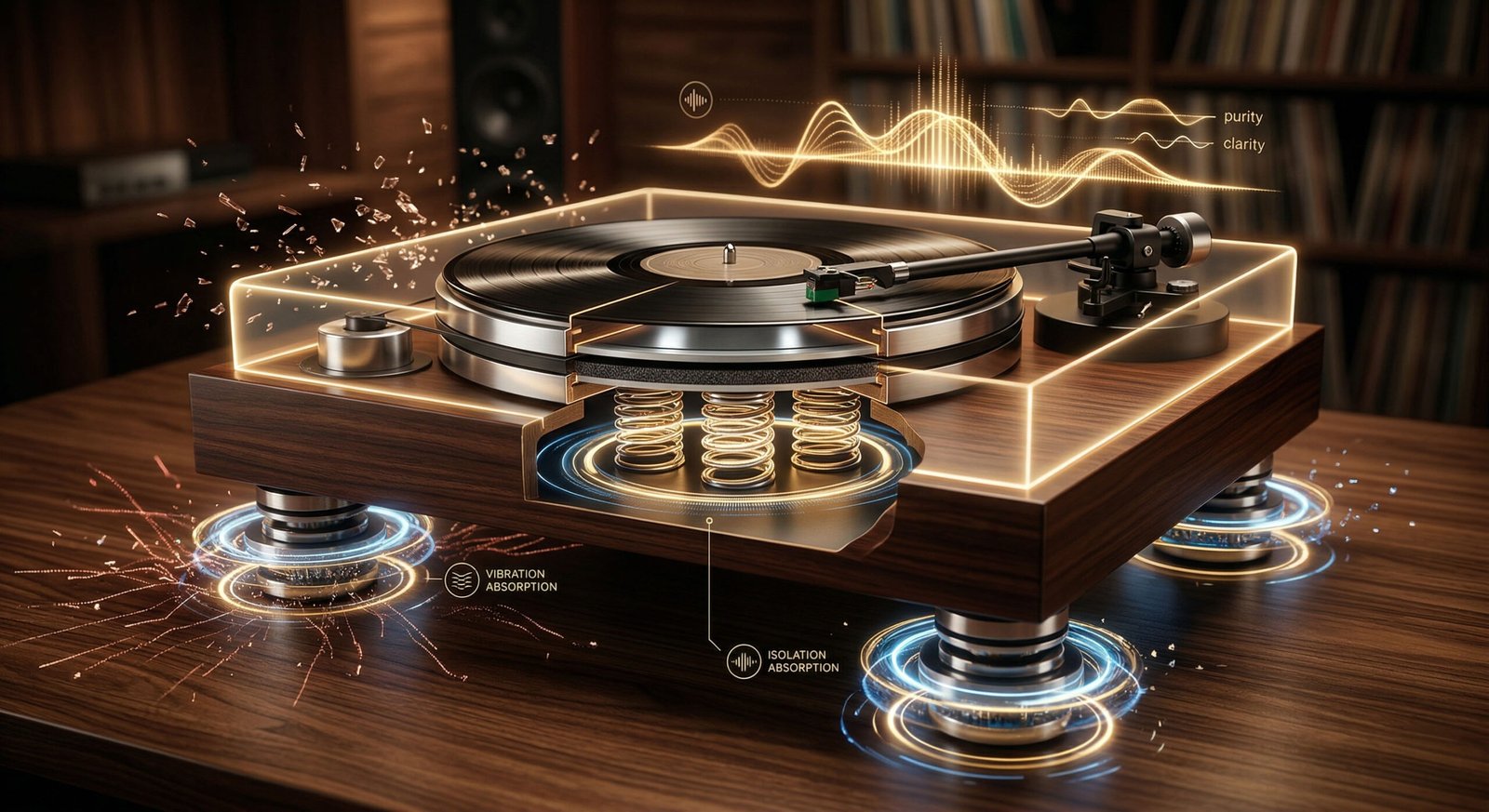
Turntable Isolation — Stopping Vibration From Ruining Your Sound
Vinyl 101 · Unit 6 · Lesson 6.3 The hierarchy of solutions — cheapest to most effective 1. Move the record player off the same surface as your speakers — free, immediate, solves most problems. 2. Isolation feet (sorbothane pads) — $15–40, absorbs structure-borne vibration. 3. Isolation platform — $50–200, more mass and damping for […]
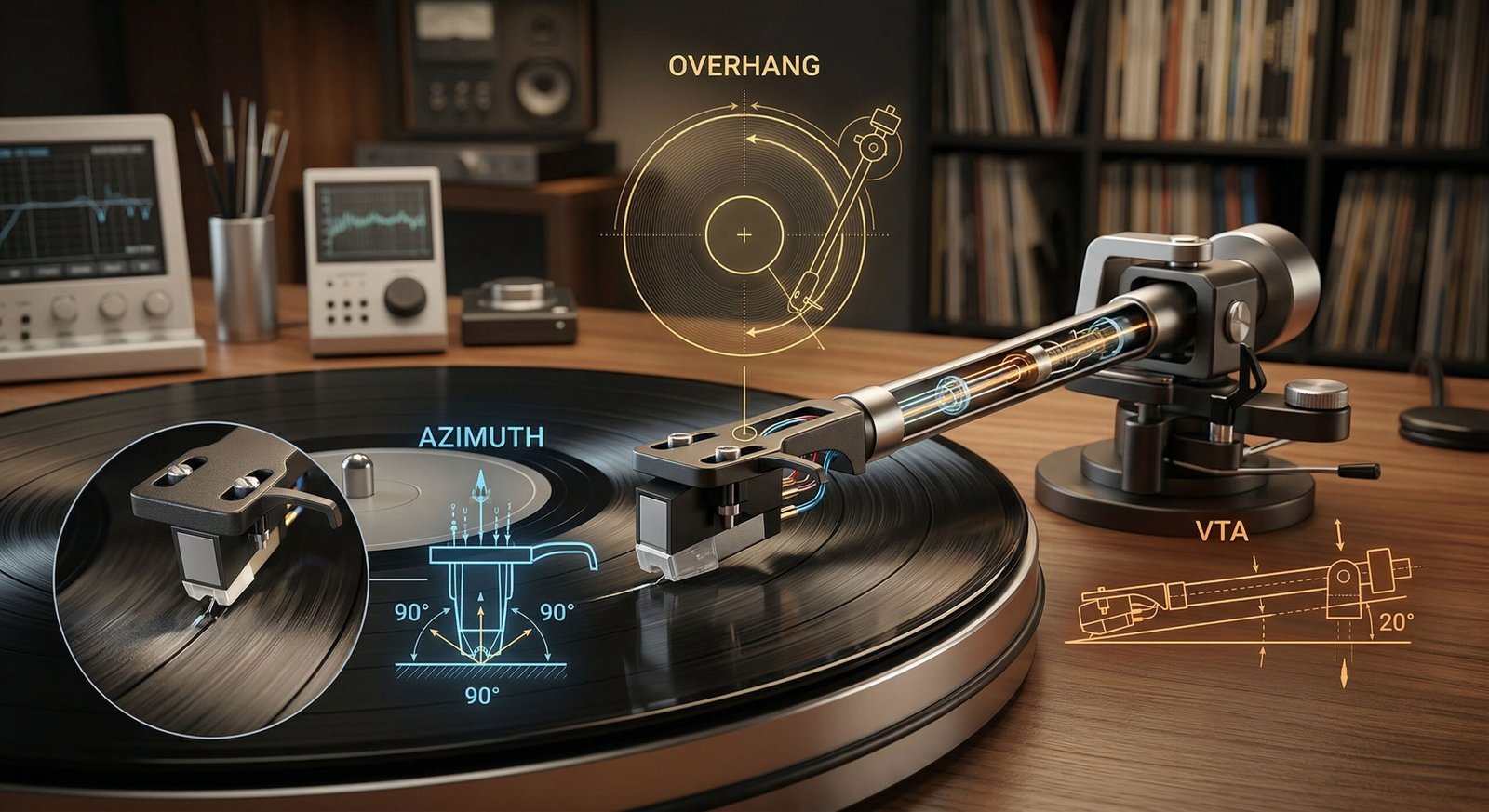
Tonearm Alignment Explained — Overhang, Azimuth and VTA
This is one part of a larger topic. For the full picture — cartridge types, stylus shapes, tracking force, alignment and replacement — see Turntable Cartridges and Styli: The Complete Guide. Vinyl 101 · Unit 6 · Lesson 6.2 Three adjustments — one goal Cartridge alignment has three geometric parameters: overhang (how far the stylus […]
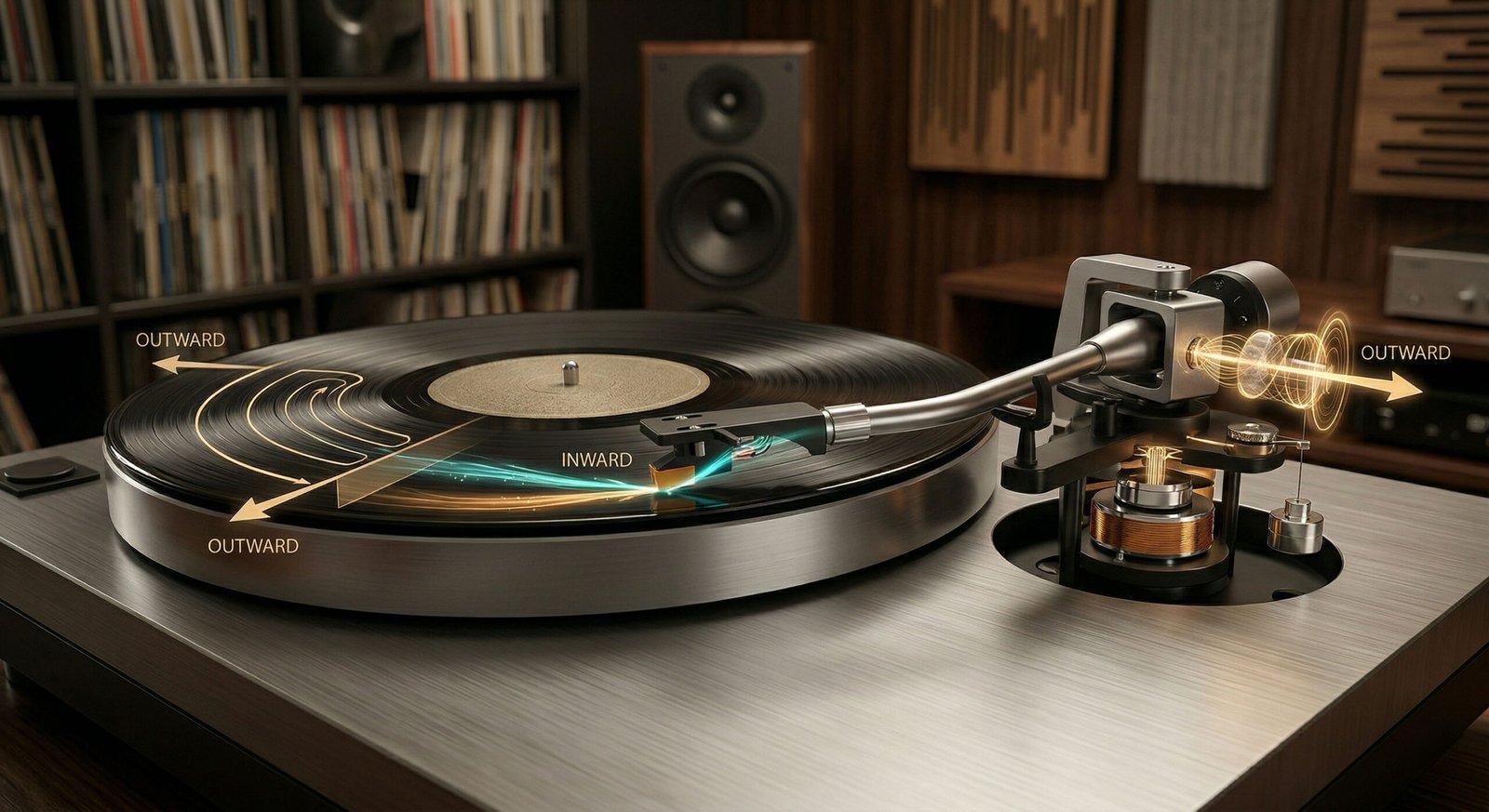
Anti-Skate Explained — The Most Misunderstood Turntable Adjustment
This is one part of a larger topic. For the full picture — cartridge types, stylus shapes, tracking force, alignment and replacement — see Turntable Cartridges and Styli: The Complete Guide. Vinyl 101 · Unit 6 · Lesson 6.1 In plain language As a tonearm sweeps inward across a spinning record, geometry and friction create […]
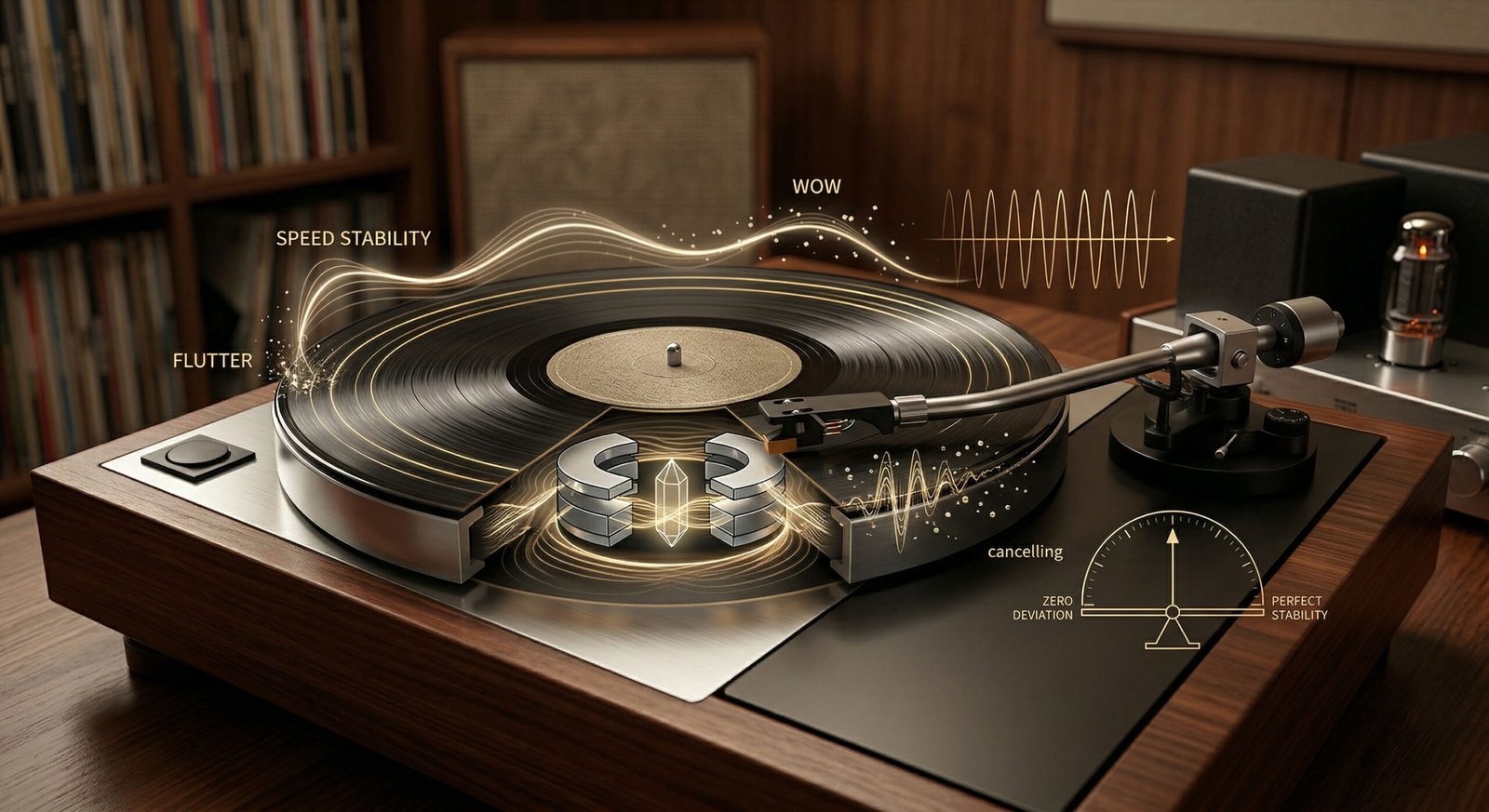
Wow and Flutter Explained — What It Is, Why It Matters, What Numbers to Look For
Vinyl 101 · Unit 5 · Lesson 5.4 In plain language Wow is slow speed variation — a gradual wavering in pitch, like a note sung slightly flat then sharp. Flutter is fast speed variation — a rapid, trembling instability in pitch. Both are measured as a percentage of the nominal speed, and both are […]
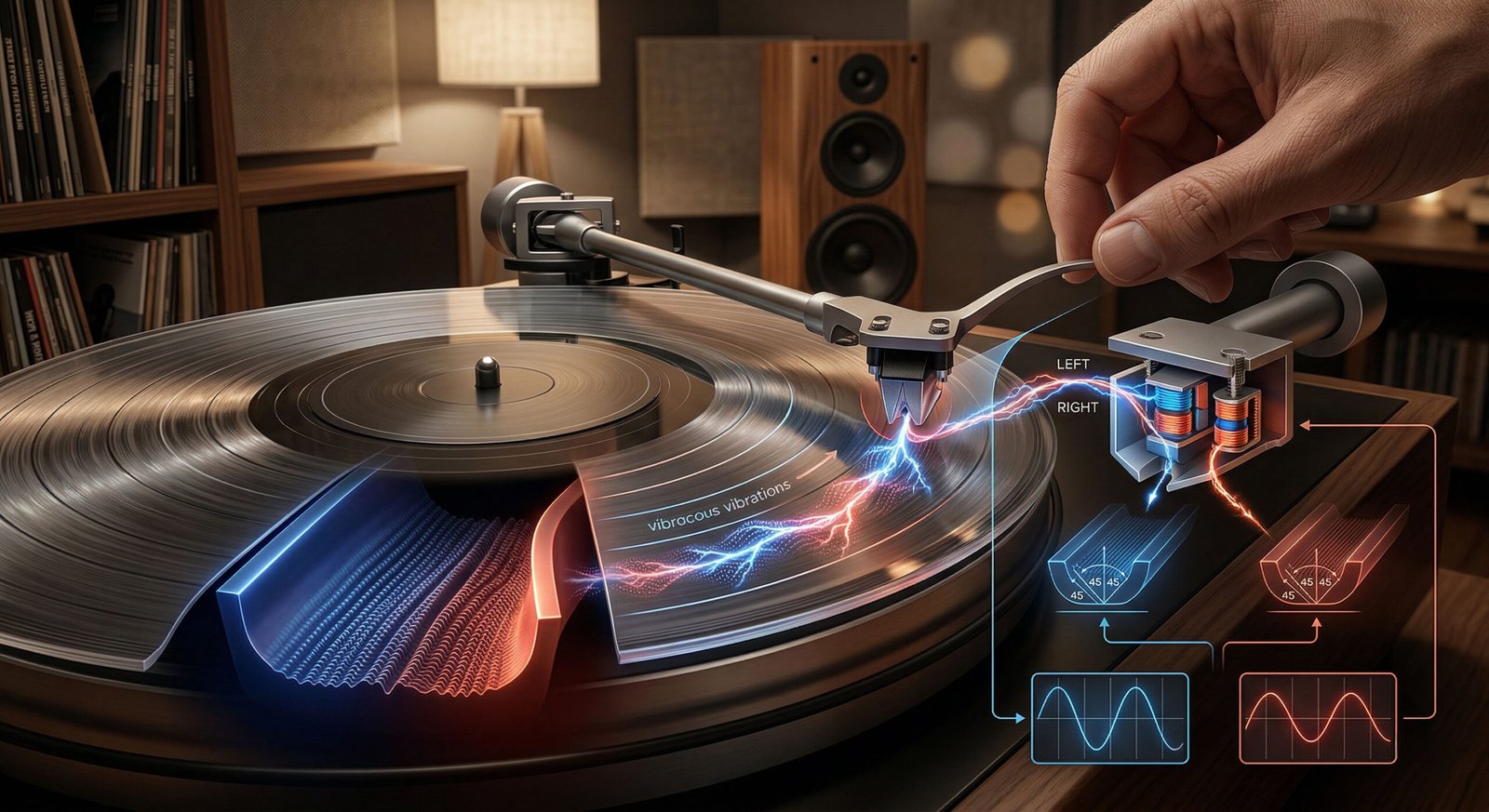
How Stereo Works on a Vinyl Record — The 45/45 System Explained
Vinyl 101 · Unit 5 · Lesson 5.3 The elegant solution in one sentence A vinyl groove has two walls, each angled at 45 degrees — and each wall carries one channel of stereo audio. The stylus tip touches both walls simultaneously, vibrating in two directions at once, and the cartridge separates those two motions […]
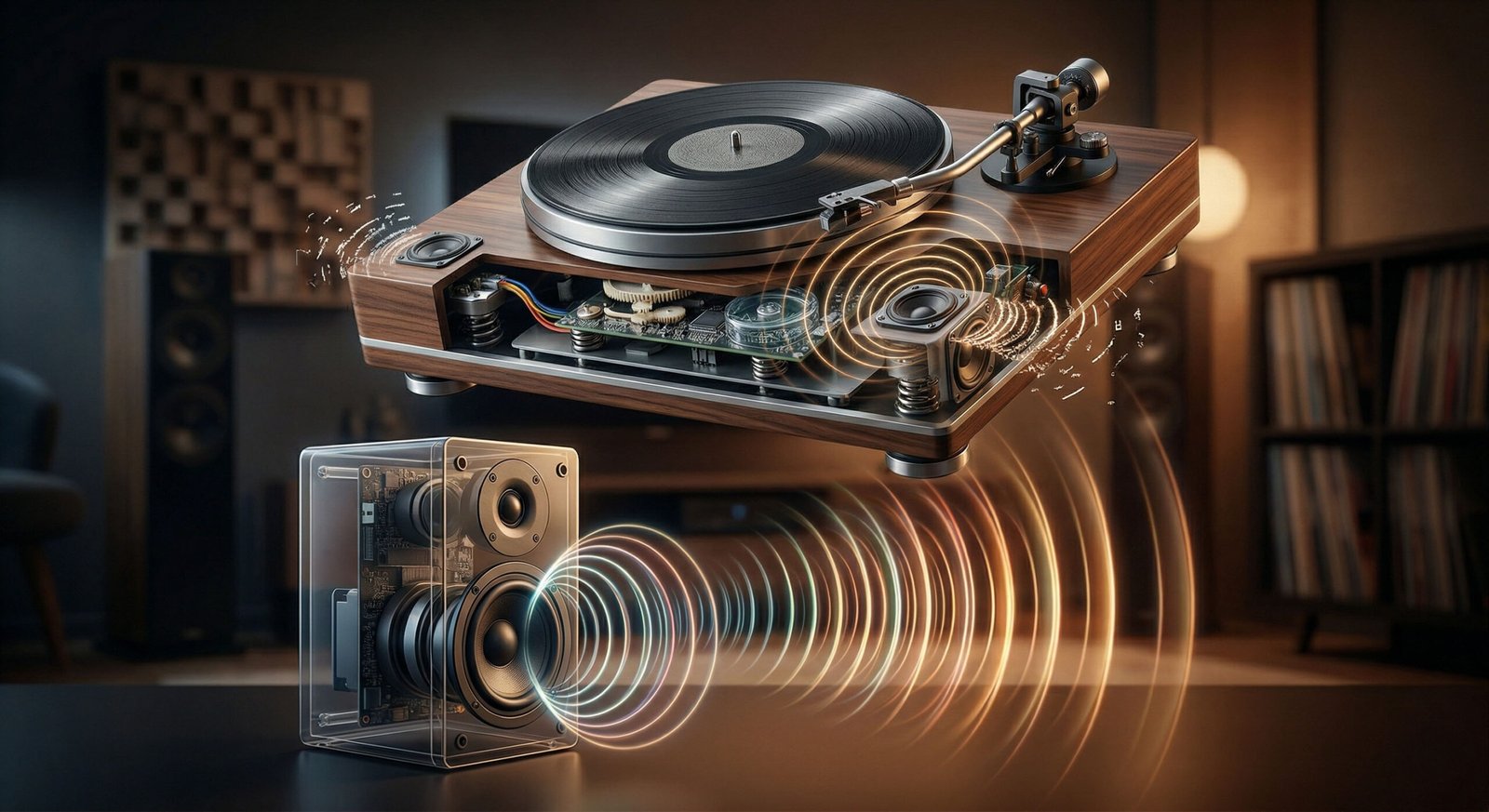
Why Record Players With Built-In Speakers Always Sound Limited — The Physics Explained
Vinyl 101 · Unit 5 · Lesson 5.2 Three reasons — all rooted in physics 1. Acoustic feedback — speakers vibrate; the stylus picks those vibrations up and replays them, creating a feedback loop that muddies the sound and limits maximum volume. 2. Small drivers can’t move enough air — there is no engineering workaround […]
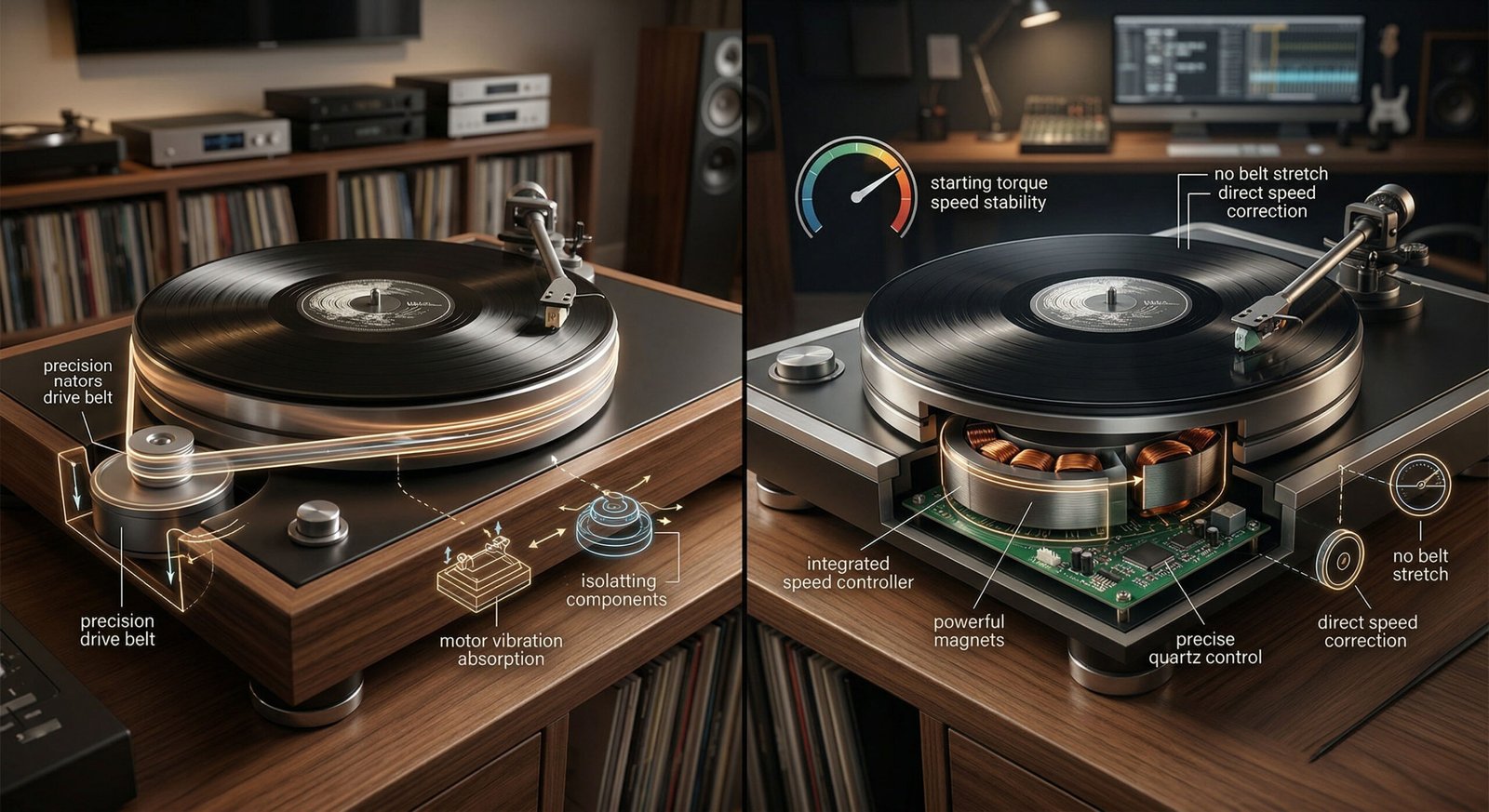
Belt Drive vs Direct Drive Turntable — The Real Difference Explained
Vinyl 101 · Unit 5 · Lesson 5.1 One sentence each Belt drive — motor sits to the side, connected to the platter by a rubber belt that absorbs vibration. Preferred by audiophiles for home listening. The Arkrocket record player range uses belt drive. Direct drive — motor sits directly under the platter and spins […]
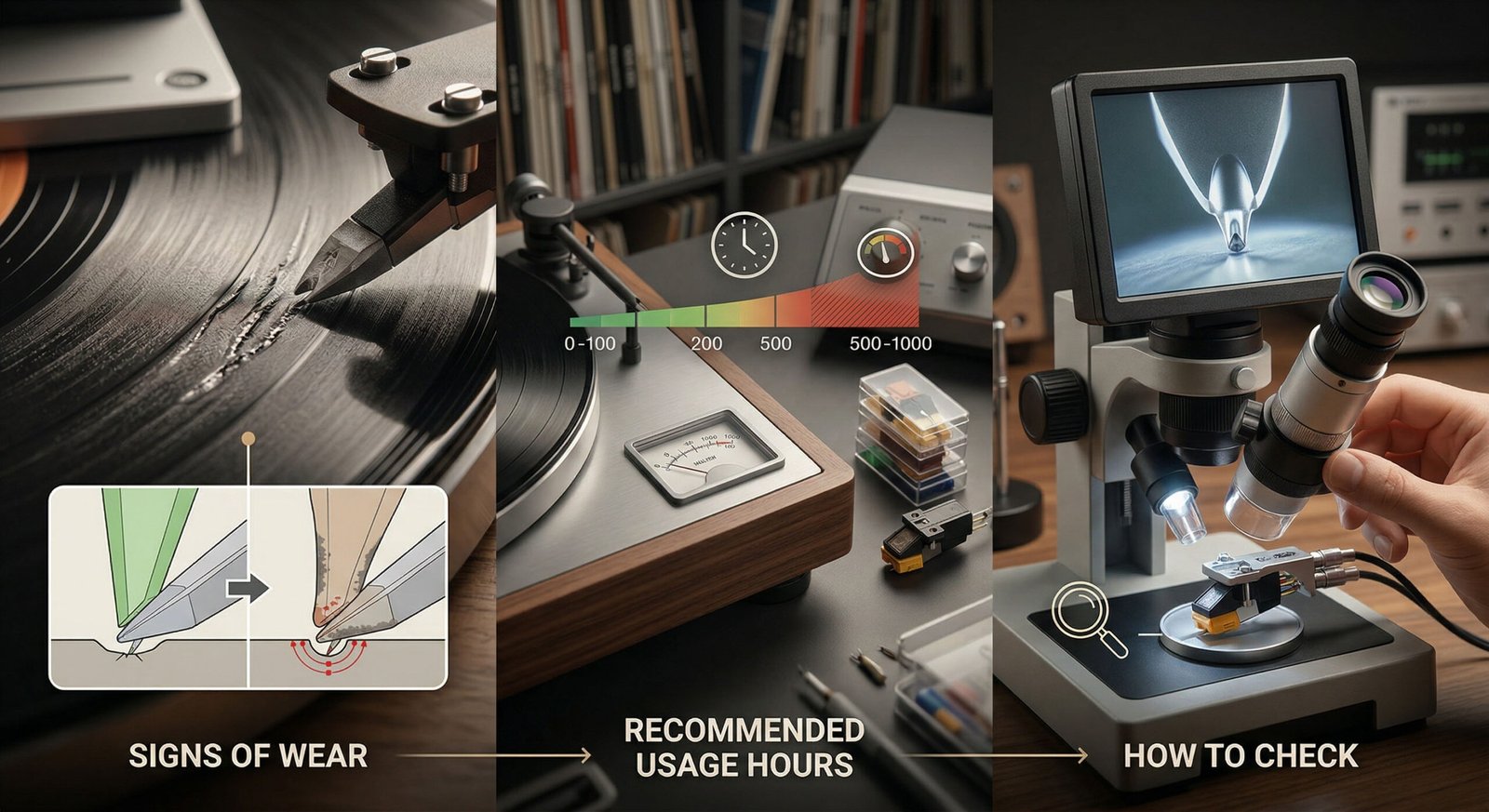
When to Replace Your Record Player Stylus — Signs, Hours, and How to Check
This is one part of a larger topic. For the full picture — cartridge types, stylus shapes, tracking force, alignment and replacement — see Turntable Cartridges and Styli: The Complete Guide. Vinyl 101 · Unit 4 · Lesson 4.4 The short answer Replace your stylus every 500–1,000 hours of play — or roughly once a […]
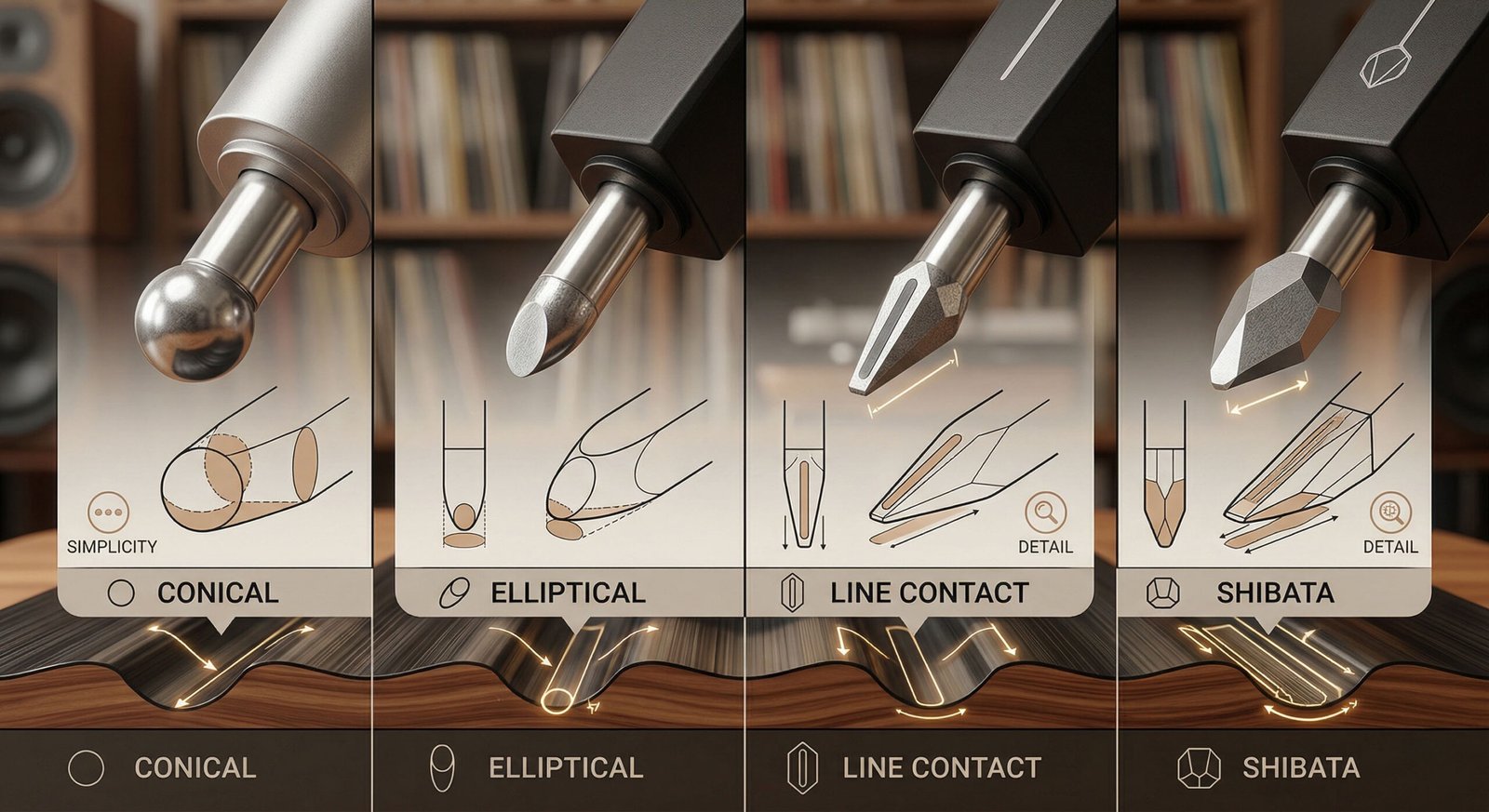
Stylus Shapes Explained — Conical, Elliptical, Line Contact and Shibata
This is one part of a larger topic. For the full picture — cartridge types, stylus shapes, tracking force, alignment and replacement — see Turntable Cartridges and Styli: The Complete Guide. Vinyl 101 · Unit 4 · Lesson 4.3 The hierarchy in one line Conical (spherical) → Elliptical → Line Contact → Shibata / MicroLine. […]
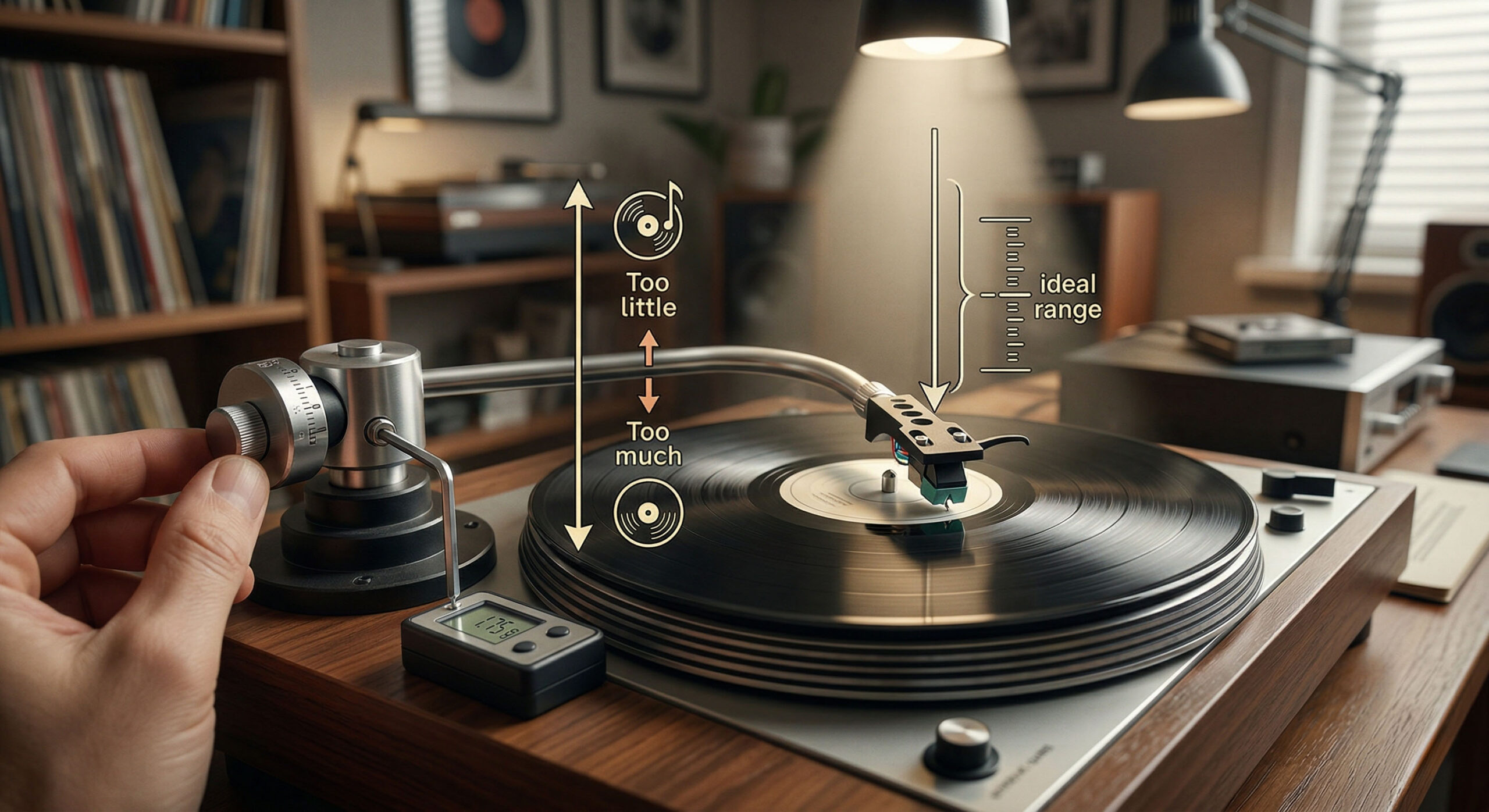
What Is Tracking Force? How to Set It Right on Your Record Player
This is one part of a larger topic. For the full picture — cartridge types, stylus shapes, tracking force, alignment and replacement — see Turntable Cartridges and Styli: The Complete Guide. Vinyl 101 · Unit 4 · Lesson 4.2 In one sentence Tracking force — also called VTF (Vertical Tracking Force) or stylus pressure — […]
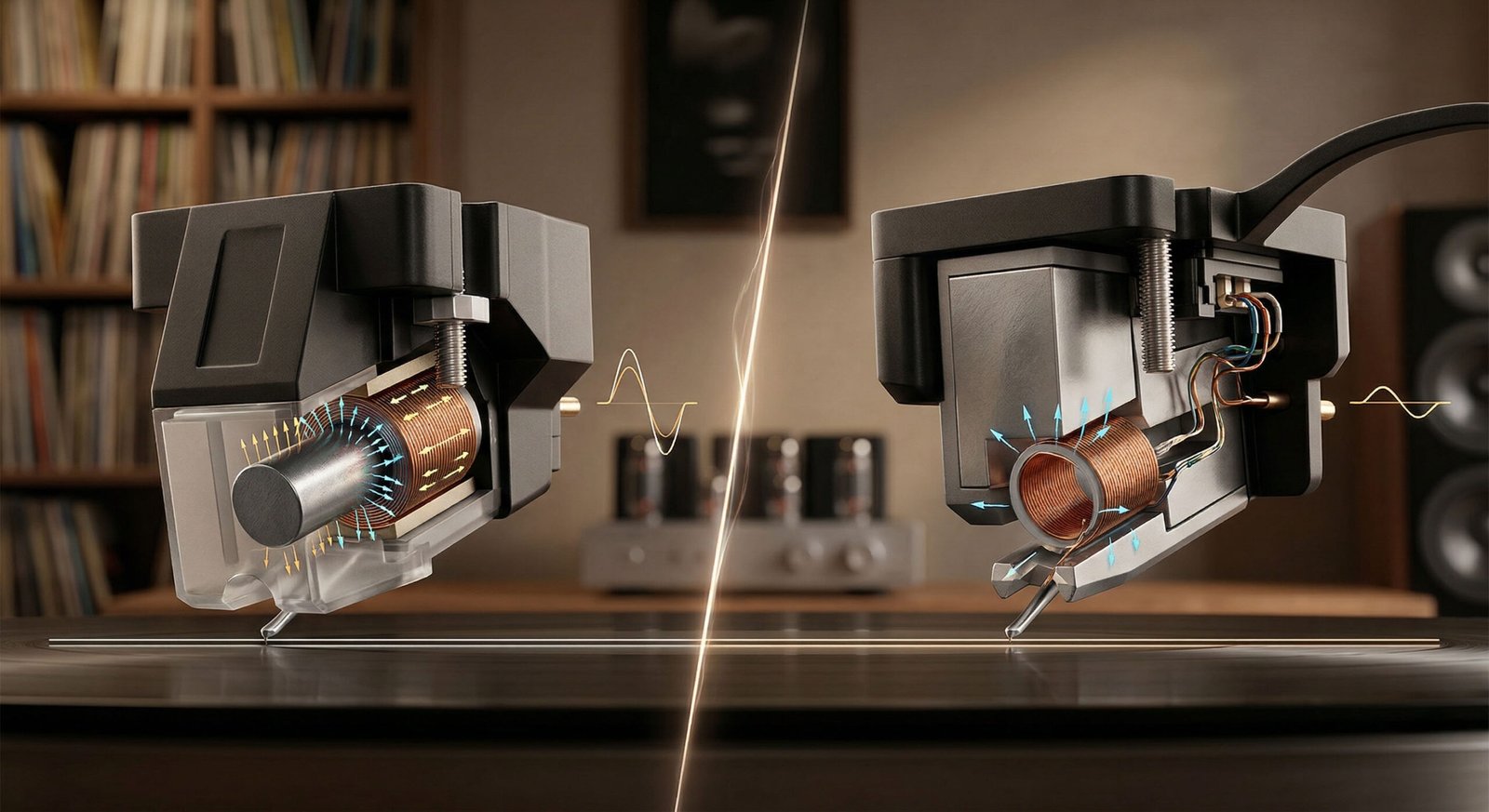
MM vs MC Cartridge — Moving Magnet vs Moving Coil Explained
This is one part of a larger topic. For the full picture — cartridge types, stylus shapes, tracking force, alignment and replacement — see Turntable Cartridges and Styli: The Complete Guide. Vinyl 101 · Unit 4 · Lesson 4.1 The short answer Moving Magnet (MM) — the standard on virtually every record player under $1,000. […]
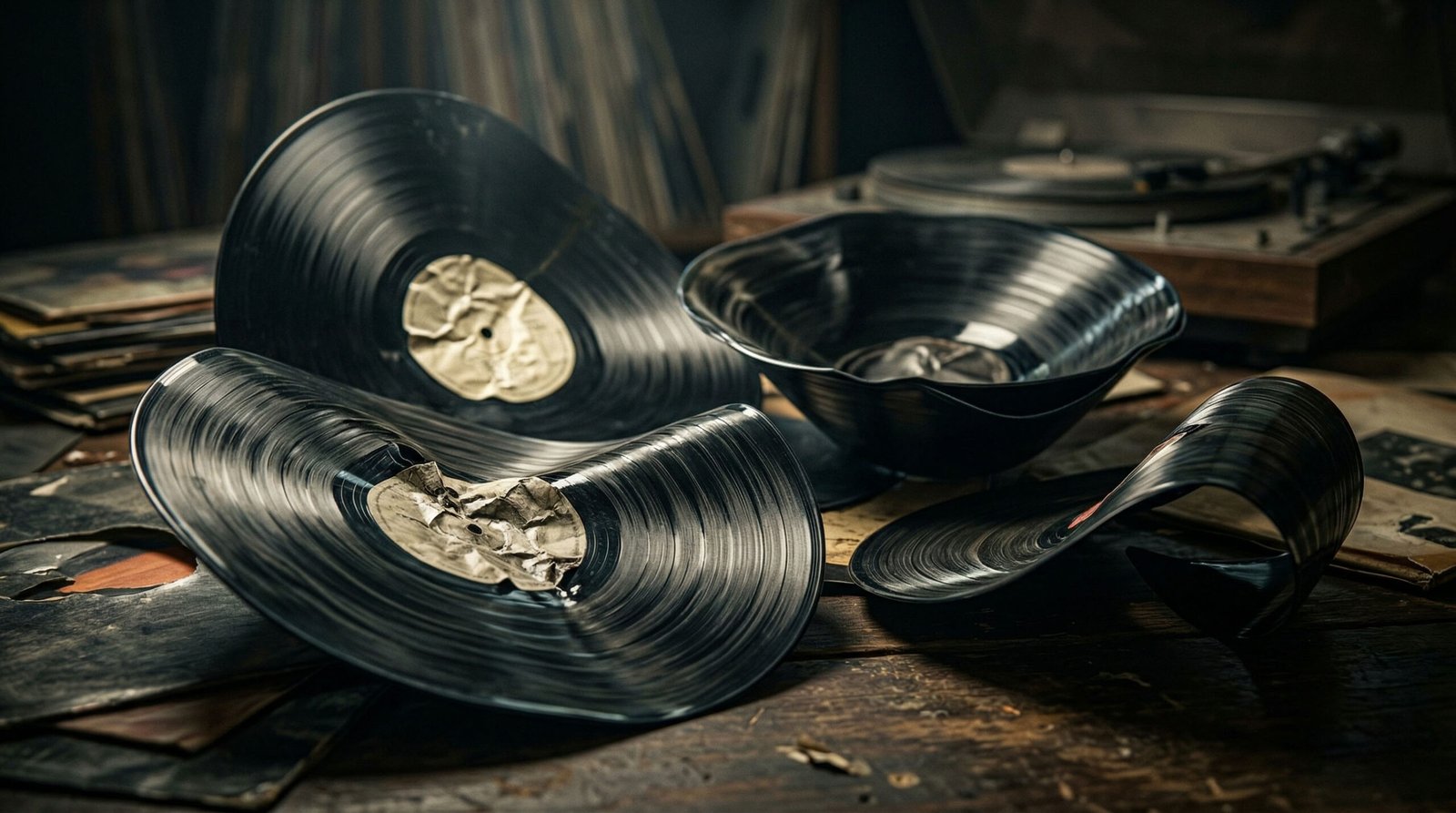
Warped Vinyl Records — Causes, Prevention and Can They Be Fixed?
Vinyl 101 · Unit 3 · Lesson 3.4 The honest answers Can warped records be fixed? Sometimes — mild dish warps and slight bends often respond to flattening methods. Severe S-warps and edge warps frequently cannot be fully restored. Will a warped record damage your record player? A mild warp is usually fine. A severe […]
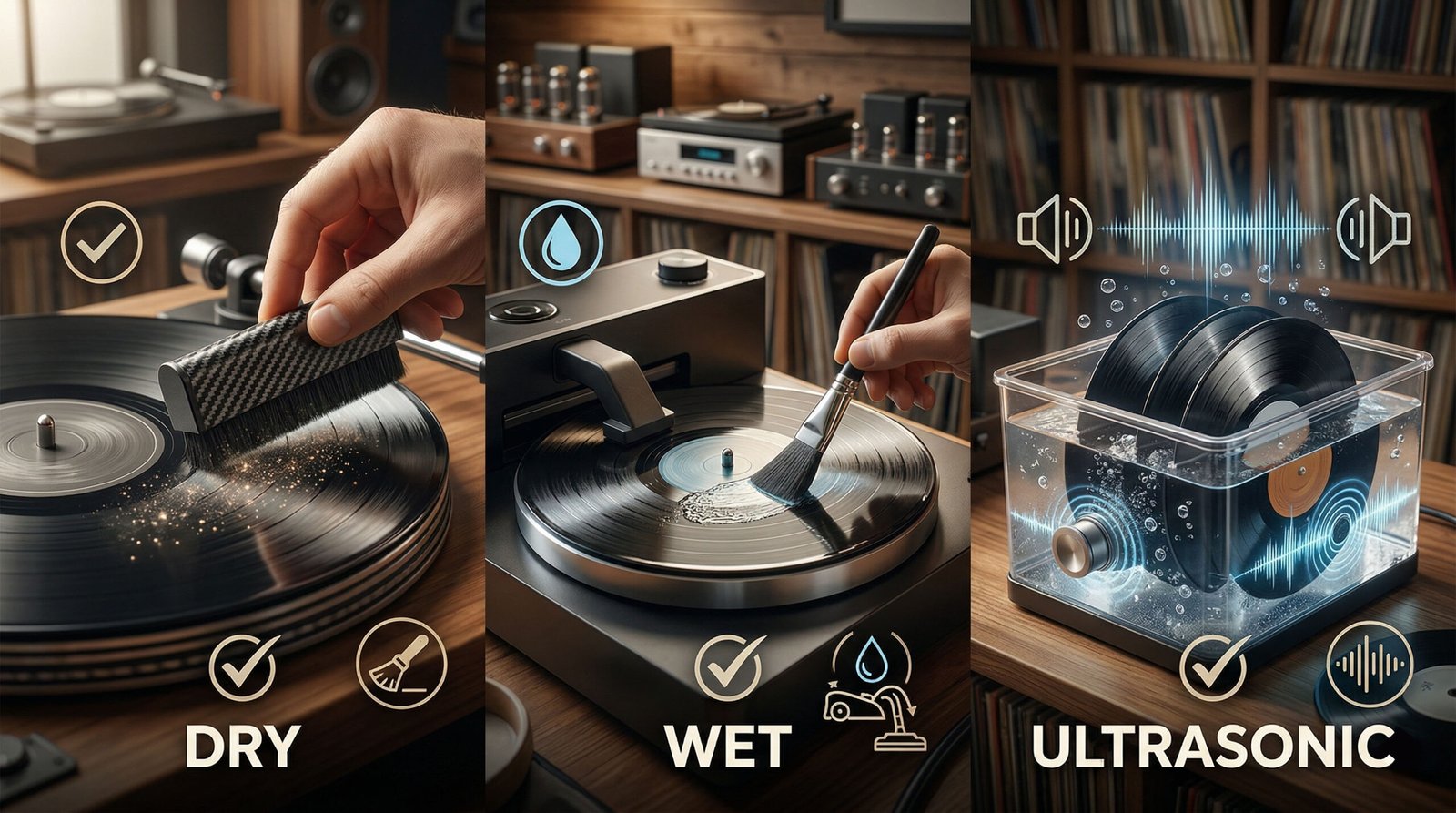
How to Clean Vinyl Records — Dry, Wet and Ultrasonic Methods Explained
Vinyl 101 · Unit 3 · Lesson 3.3 Three methods — one for every situation Dry brush — before every single play. Takes 10 seconds. Removes loose dust and static. The minimum every record player owner should do. Wet clean — whenever a record sounds worse than it should, or before playing any used record. […]
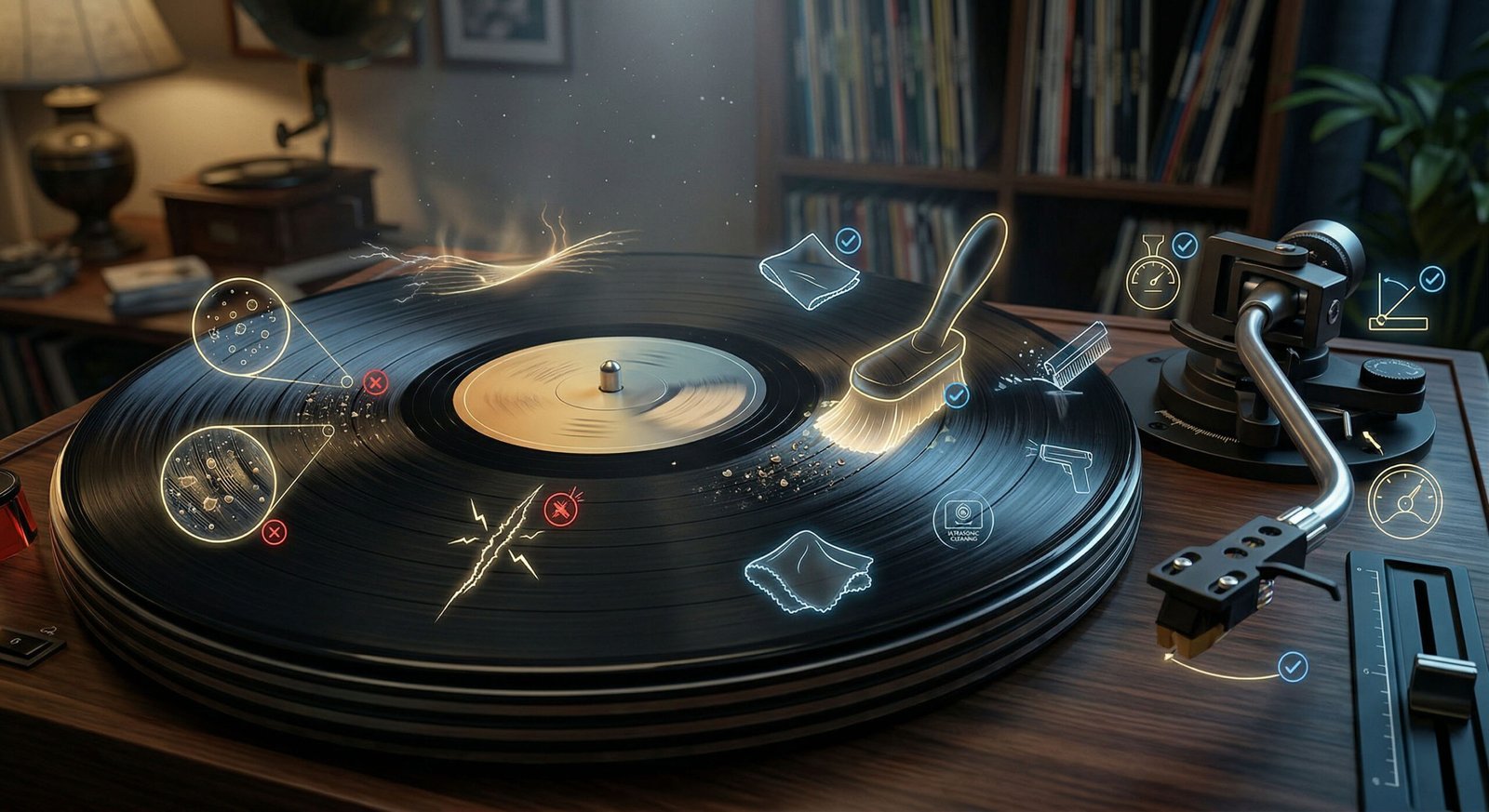
Vinyl Crackle, Pops and Surface Noise — Causes and Fixes
Vinyl 101 · Unit 3 · Lesson 3.2 The honest truth about vinyl noise Some surface noise is normal and permanent — it is part of the analog format. But most crackle, pops and hiss are caused by fixable problems: dust in the grooves, static electricity, a dirty stylus, or groove damage from a worn […]
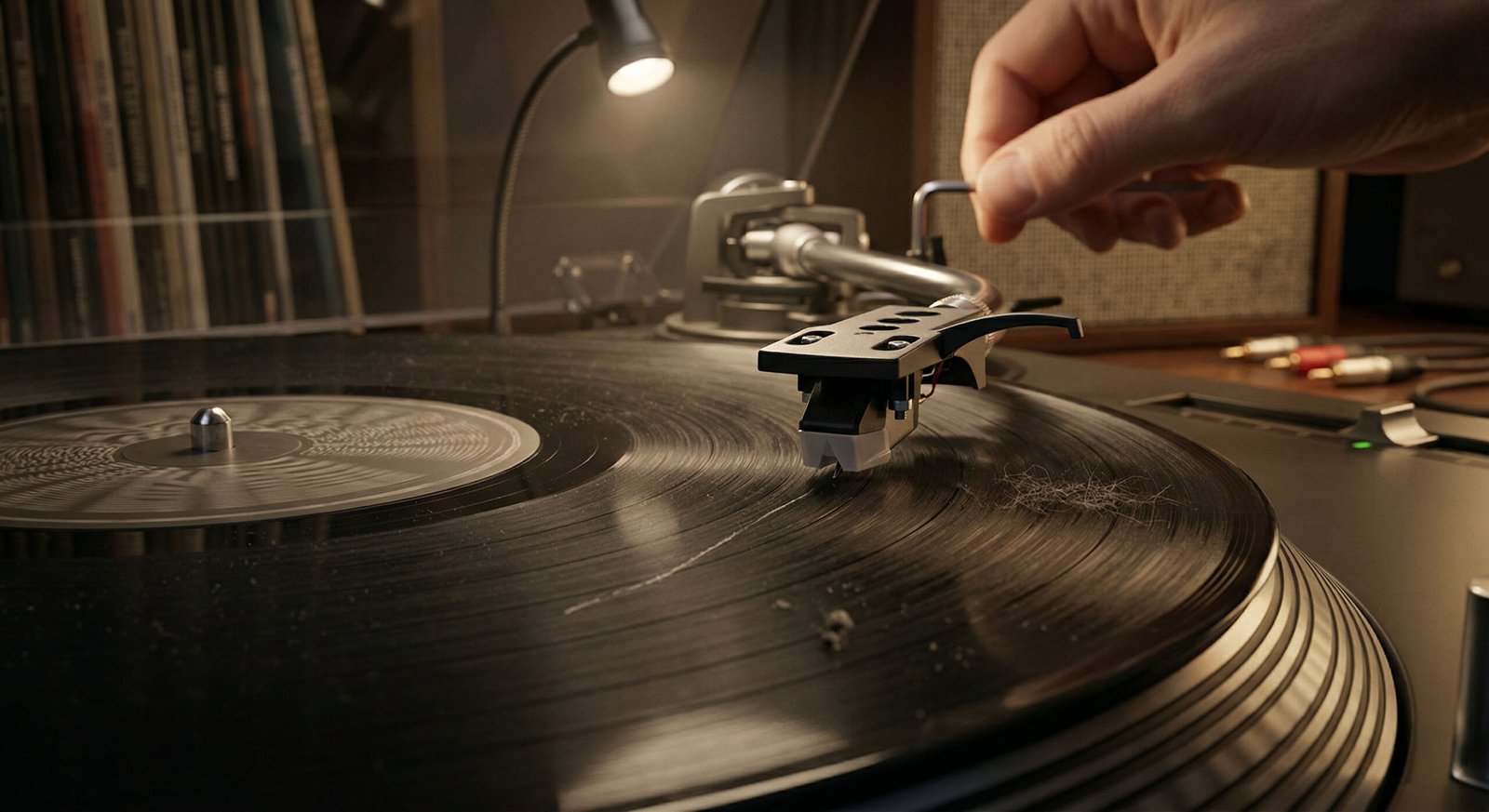
Why Does My Record Skip? Every Cause Diagnosed and Fixed
Vinyl 101 · Unit 3 · Lesson 3.1 Start here — the most likely causes in order 1. Dirty record or dirty stylus — by far the most common cause. Clean both before anything else. 2. Tracking force too low — stylus can’t stay in groove on dynamic passages. 3. Vibration from speakers or floor […]
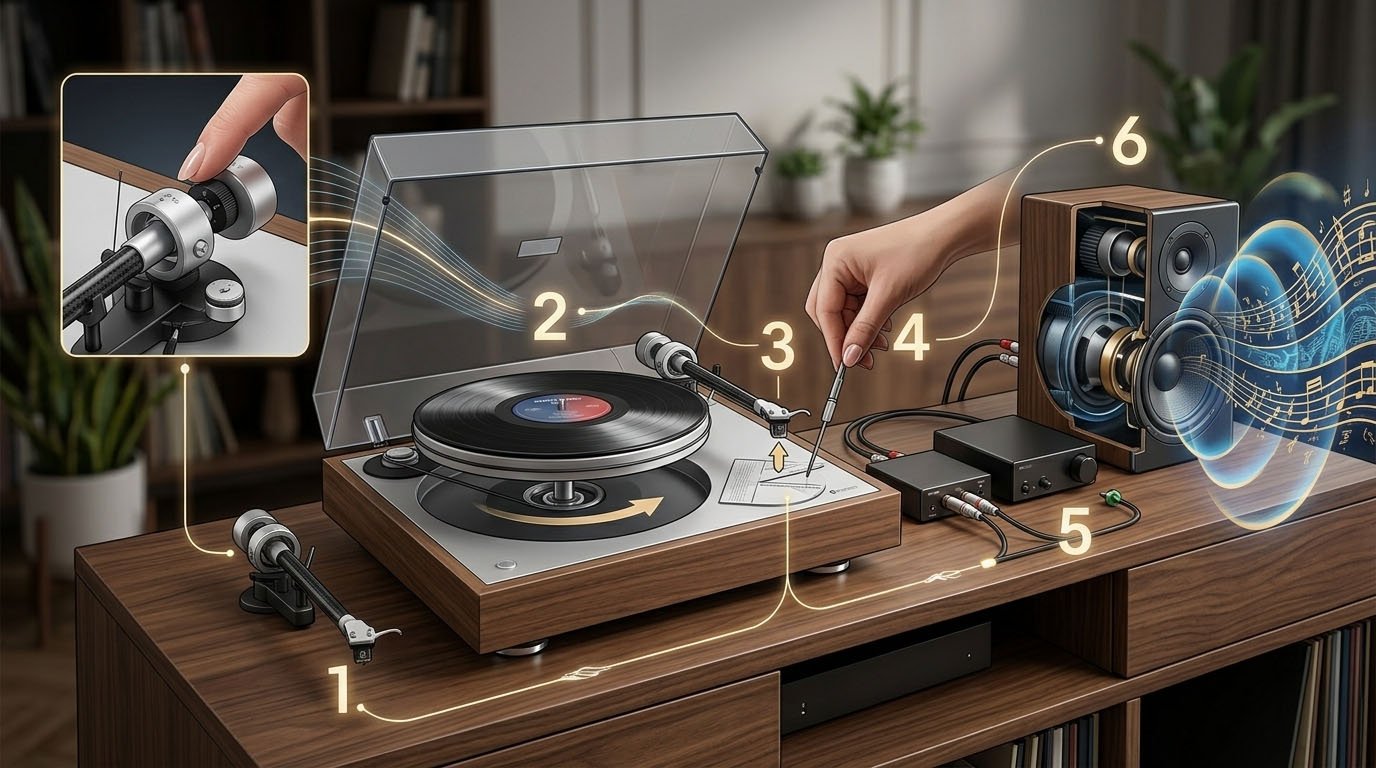
Setting Up Your First Record Player — Complete Step-by-Step Guide
、 Vinyl 101 · Unit 2 · Lesson 2.4 Two types of setup Setup depends on which record player you have. All-in-one record players (like the Arkrocket Huygens) are essentially plug-and-play — unbox, place on a stable surface, connect power, and play. Component record players with adjustable tonearms require additional steps: balancing the tonearm, setting […]
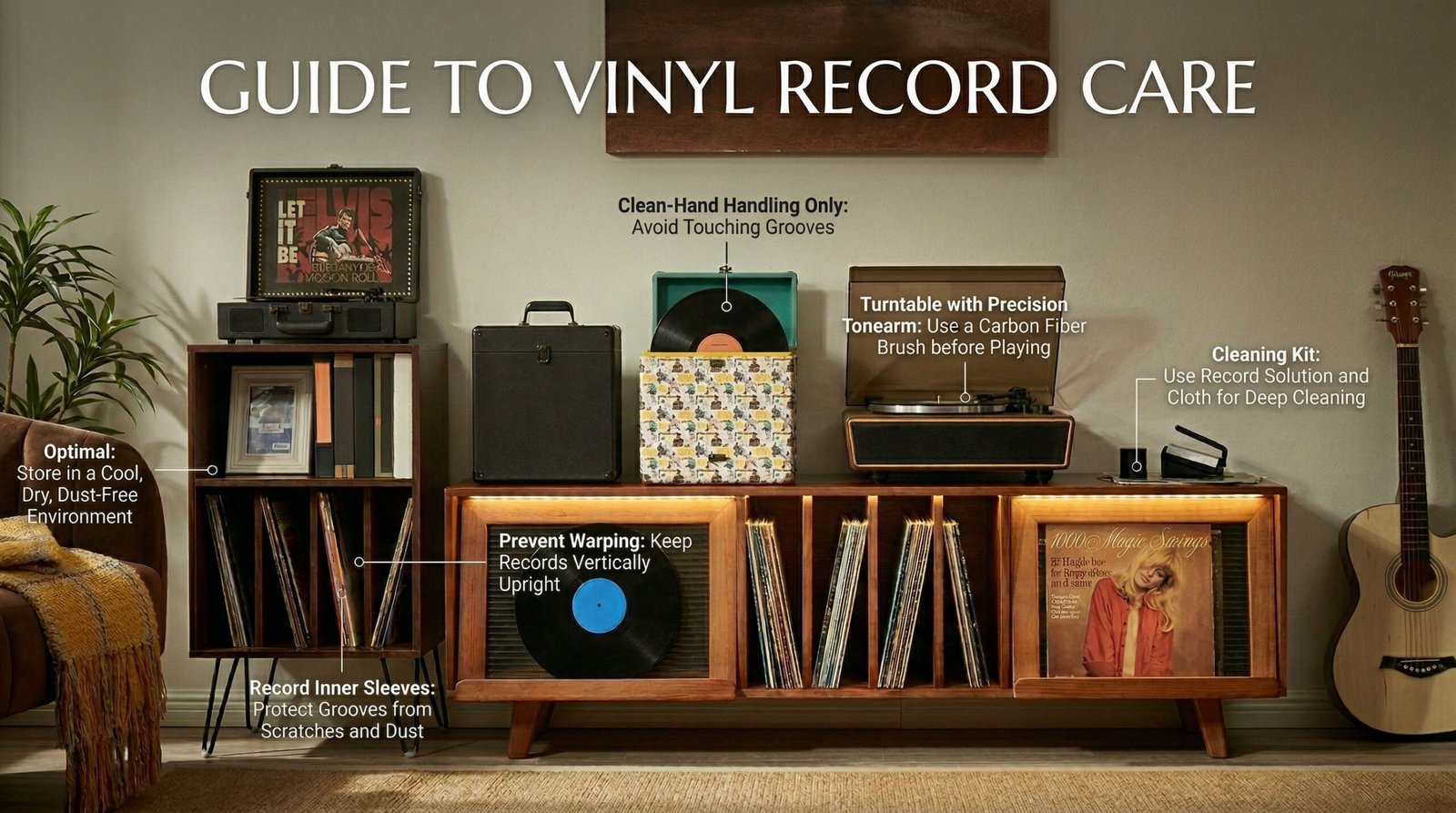
How to Handle and Store Vinyl Records — The Complete Care Guide
Vinyl 101 · Unit 2 · Lesson 2.3 The three rules that protect 90% of collections Handle by edges only — never touch the playing surface. Store vertically — never flat or leaning. Keep inner sleeves — the paper sleeve between the record and the jacket is not decoration. Follow these three rules and your […]
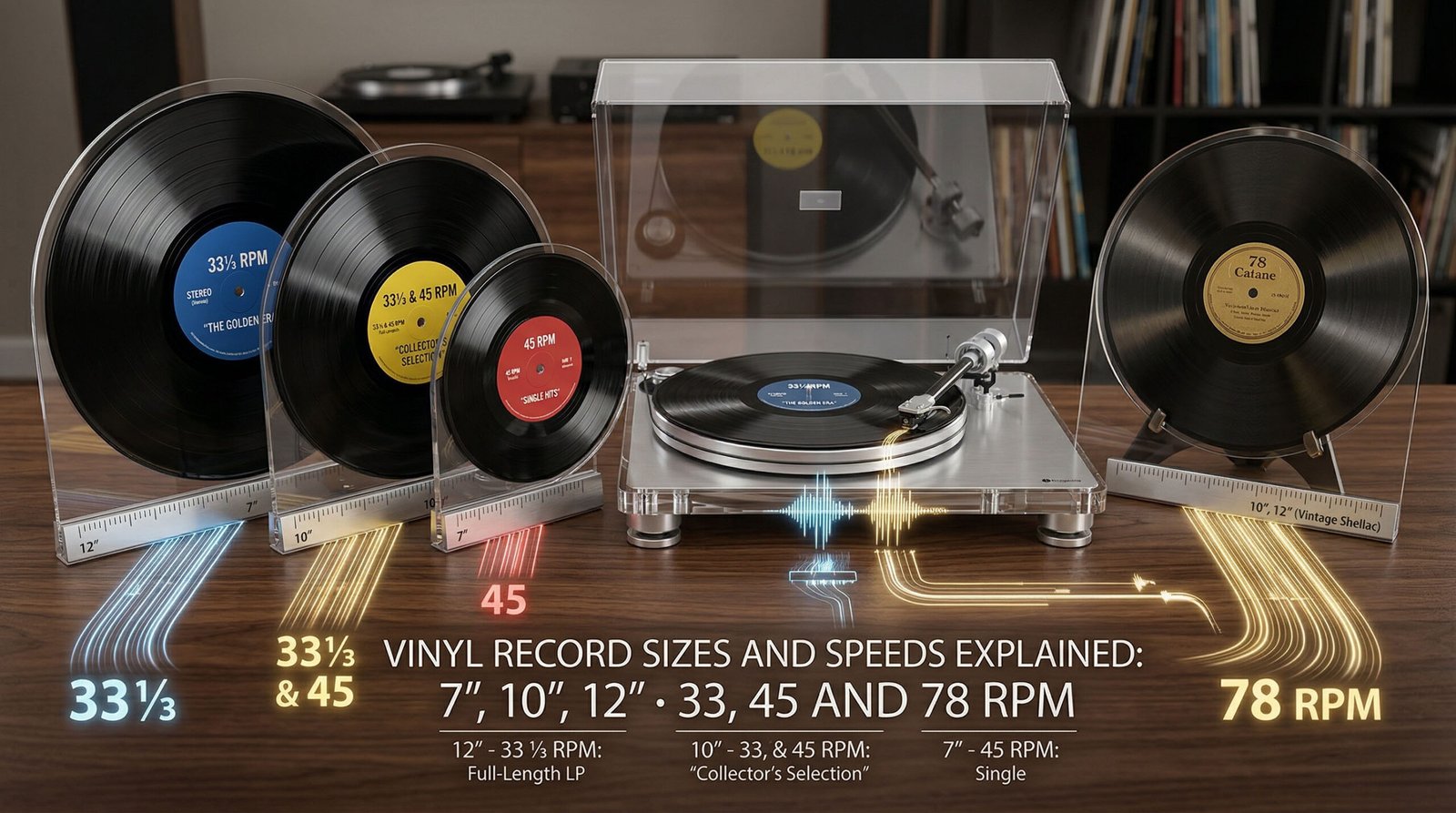
Vinyl Record Sizes and Speeds Explained: 7″, 10″, 12″ · 33, 45 and 78 RPM
Vinyl 101 · Unit 2 · Lesson 2.2 The quick reference 12″ at 33⅓ RPM = the standard album (LP) — up to 22 minutes per side. 7″ at 45 RPM = the classic single — up to 5 minutes per side. 10″ at 78 RPM = pre-1960 shellac records — a different material, different […]
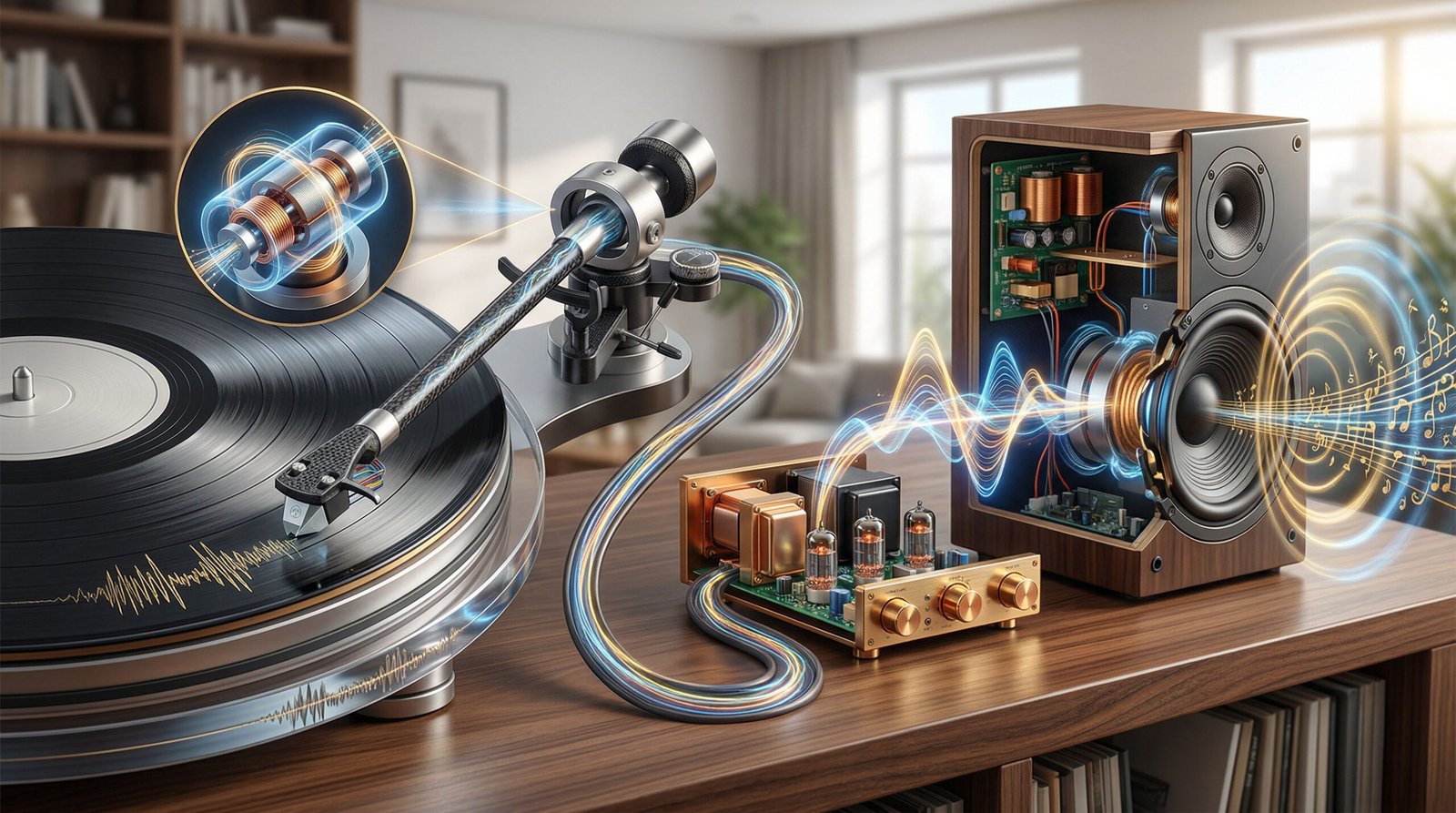
How Does a Record Player Work? From Groove to Speaker, Explained
Vinyl 101 · Unit 2 · Lesson 2.1 The one-sentence answer A record player works by dragging a diamond-tipped stylus through a physical groove carved into vinyl, converting the groove’s tiny vibrations into an electrical signal, amplifying that signal, and sending it to speakers. No digital processing, no software — just physics turning movement into […]
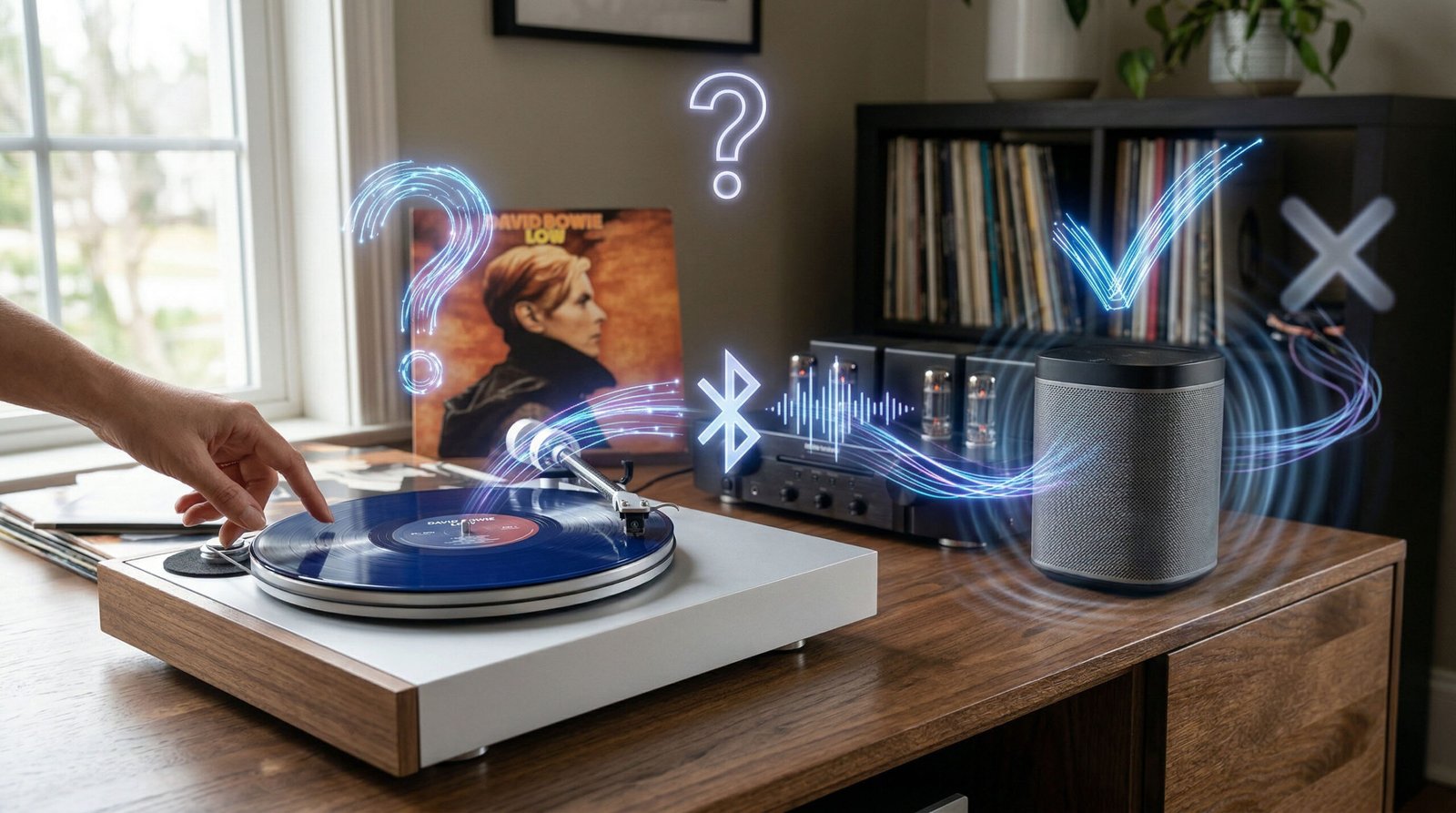
Is a Bluetooth Record Player Worth Buying? The Honest Answer
Vinyl 101 · Unit 1 · Lesson 1.5 The short answer It depends on how you listen. A Bluetooth record player is worth buying if you want to connect to wireless speakers or headphones you already own, or if you want flexibility in where you place your speakers. It is not worth buying if pristine […]

Automatic vs Manual Turntable — Which Is Right for You?
Vinyl 101 · Unit 1 · Lesson 1.4 The short answer The difference is purely about how the tonearm moves — not about sound quality in any meaningful way for casual listeners. Automatic record players do the lifting for you. Manual record players require you to place and lift the tonearm yourself. Semi-automatic splits the […]
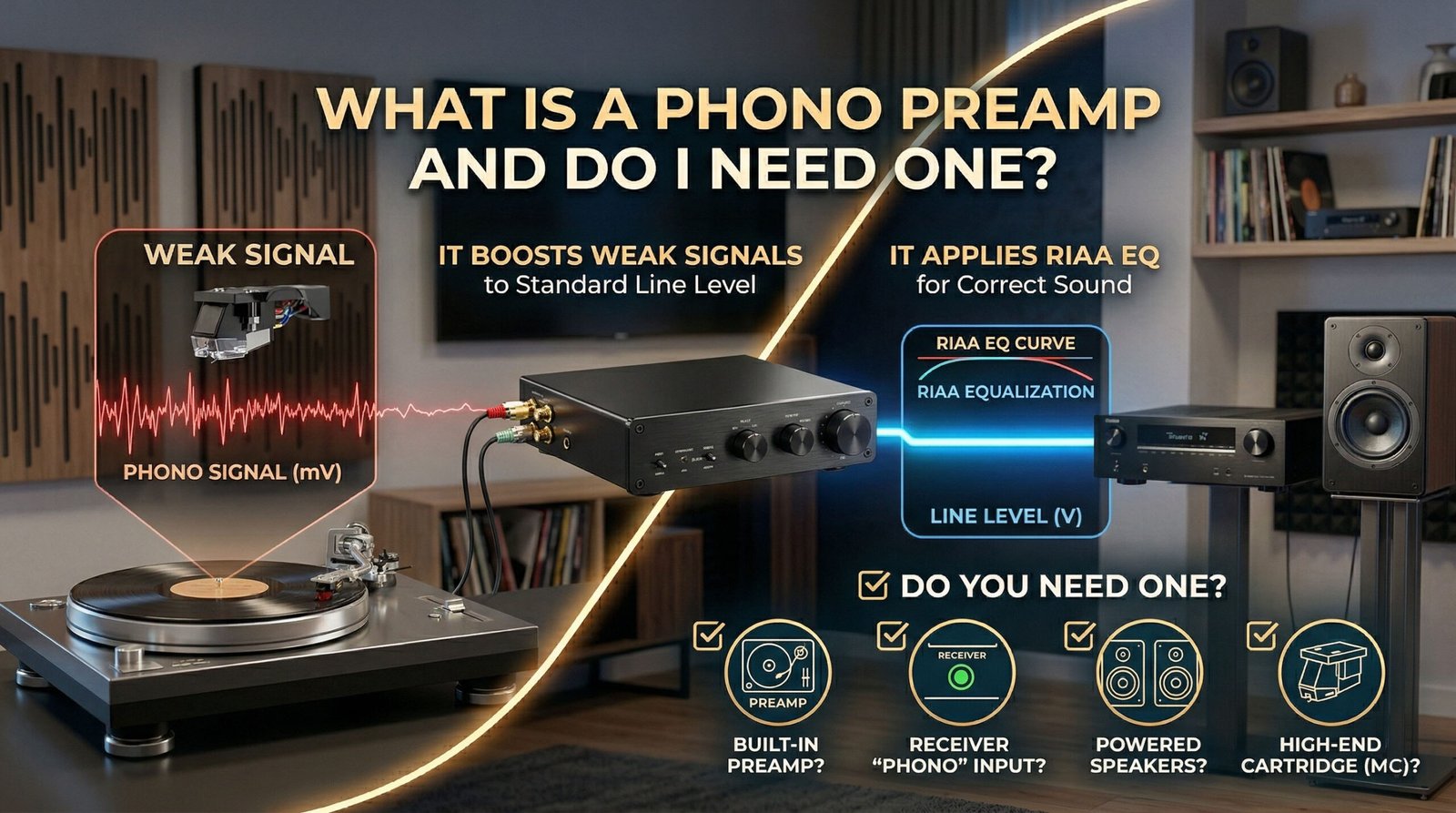
What Is a Phono Preamp — and Do I Actually Need One?
Vinyl 101 · Unit 1 · Lesson 1.3 The short answer Yes — every turntable setup needs a phono preamp somewhere in the chain. The question is whether it’s already built into your turntable, your speakers, or your amplifier — or whether you need to add a separate one. Plugging a turntable without a phono […]

Do I Need to Buy Speakers Separately? Built-in vs External Speakers Explained
Vinyl 101 · Unit 1 · Lesson 1.2 The short answer It depends on which turntable you buy. All-in-one turntables with built-in speakers — like the Arkrocket Huygens — work straight out of the box. Component turntables — like the Audio-Technica LP120X or Pro-Ject Debut Carbon — require external speakers and usually a phono preamp. […]
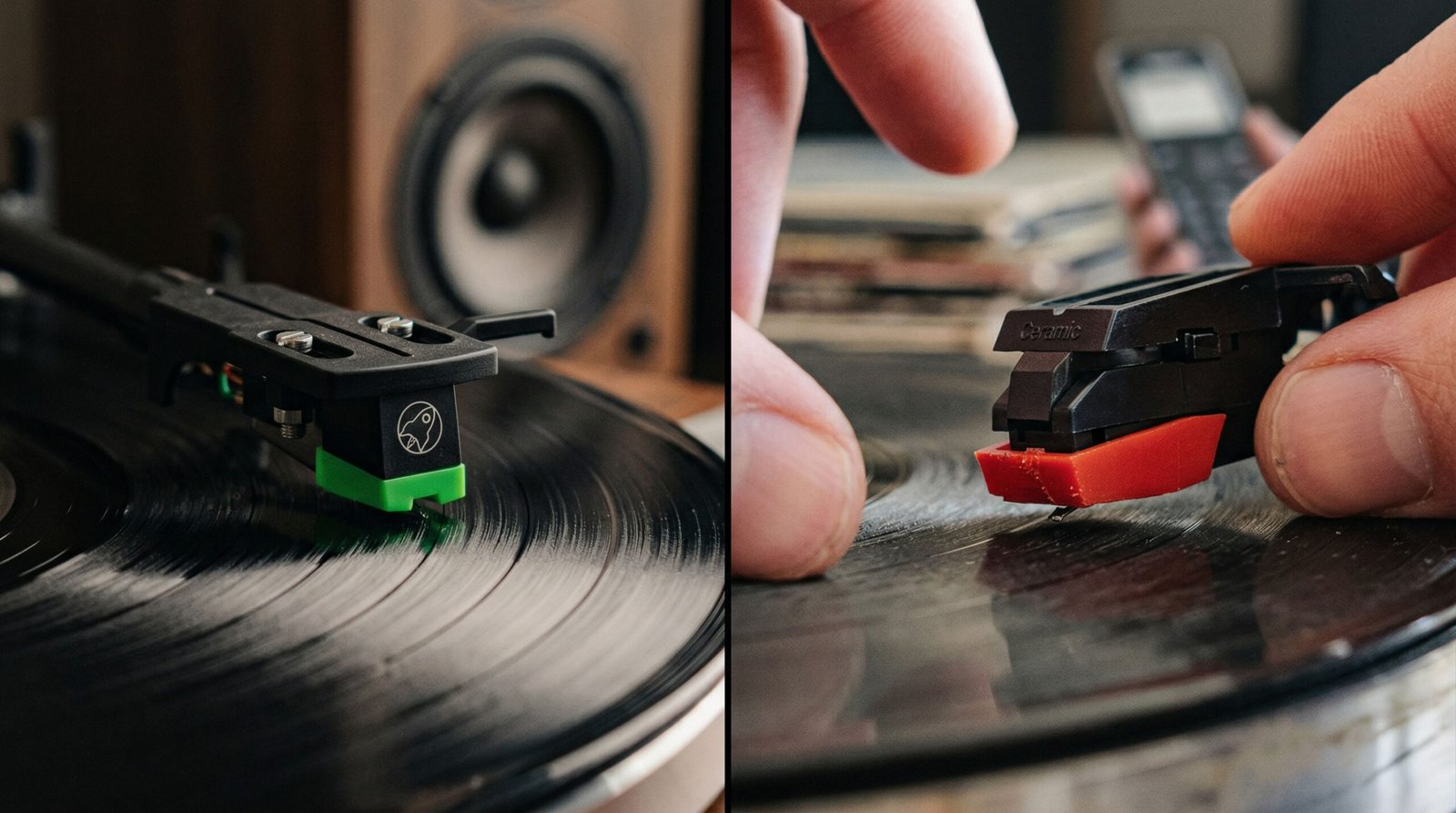
Will a Cheap Suitcase Record Player Damage Your Vinyl? The Truth About Ceramic Cartridges
Vinyl 101 · Unit 1 · Lesson 1.1 The short answer Yes — most cheap suitcase record players will gradually damage your vinyl. The culprit is the ceramic cartridge, which tracks at 3–6 grams of pressure instead of the 1–2 grams used by a proper Moving Magnet cartridge. Every play carves a little more material […]